Classical Greek Sculpture
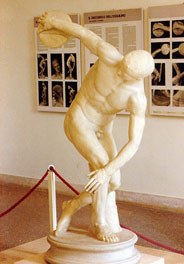
The Severe style didn't last very long, and after about thirty years it was replaced by the Classical style.Greek sculptors began to experiment with honoring the gods by showing the beauty and grace of the human body, especially the bodies of young, athletic men (women's bodies were still not shown without their clothes).
The sculptors also became more interested in the three-dimensionality of sculpture: people being able to see it from all different sides, and not just from the front.
One of the most famous sculptors of the Classical period was Phidias (FI-dee-ass). His most famous work does not survive: it was a great gold and ivory (chryselephantine) statue of Zeus for the temple of Zeus at Olympia, made about 440 BC. It was taken to Constantinople and eventually burned in a palace fire there in 475 AD.
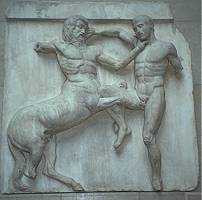
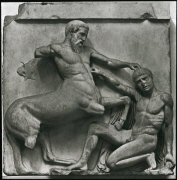
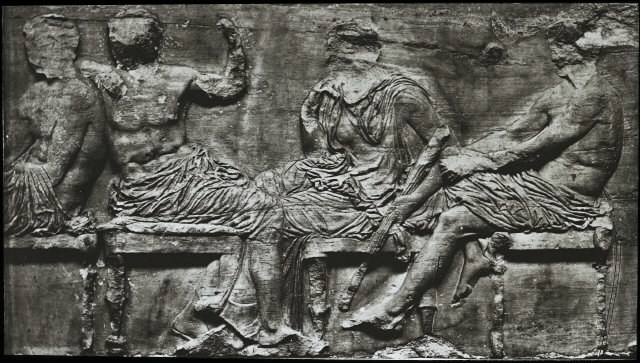
Phidias also was responsible for the sculptures on the Parthenon, though he could not have carved all of them himself because there are too many. The figures on the Parthenon represent human perfection, almost godliness.
The people (and the gods) are shown serene, calm, peaceful, in control of their emotions and their bodies, almost like dancers or as in Tai-Chi. People, to Phidias, and to other Greeks of this time, are wonderful creations of the gods, beautiful, strong, intelligent, and rational.
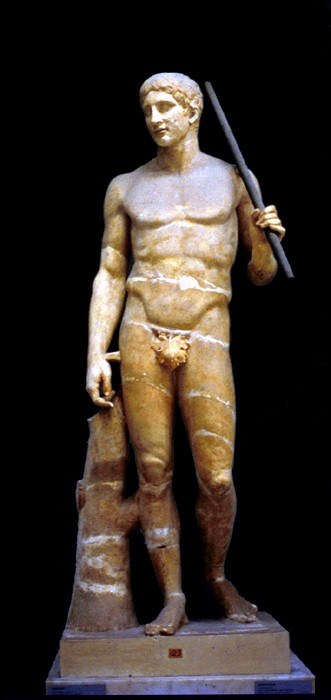
Another Greek sculptor of the classical period was Polycleitos (polly-KLY-tos), who carved the famous Doryphoros, meaning spear-carrier. Unfortunately this statue is lost, and only a later Roman version of it survives.