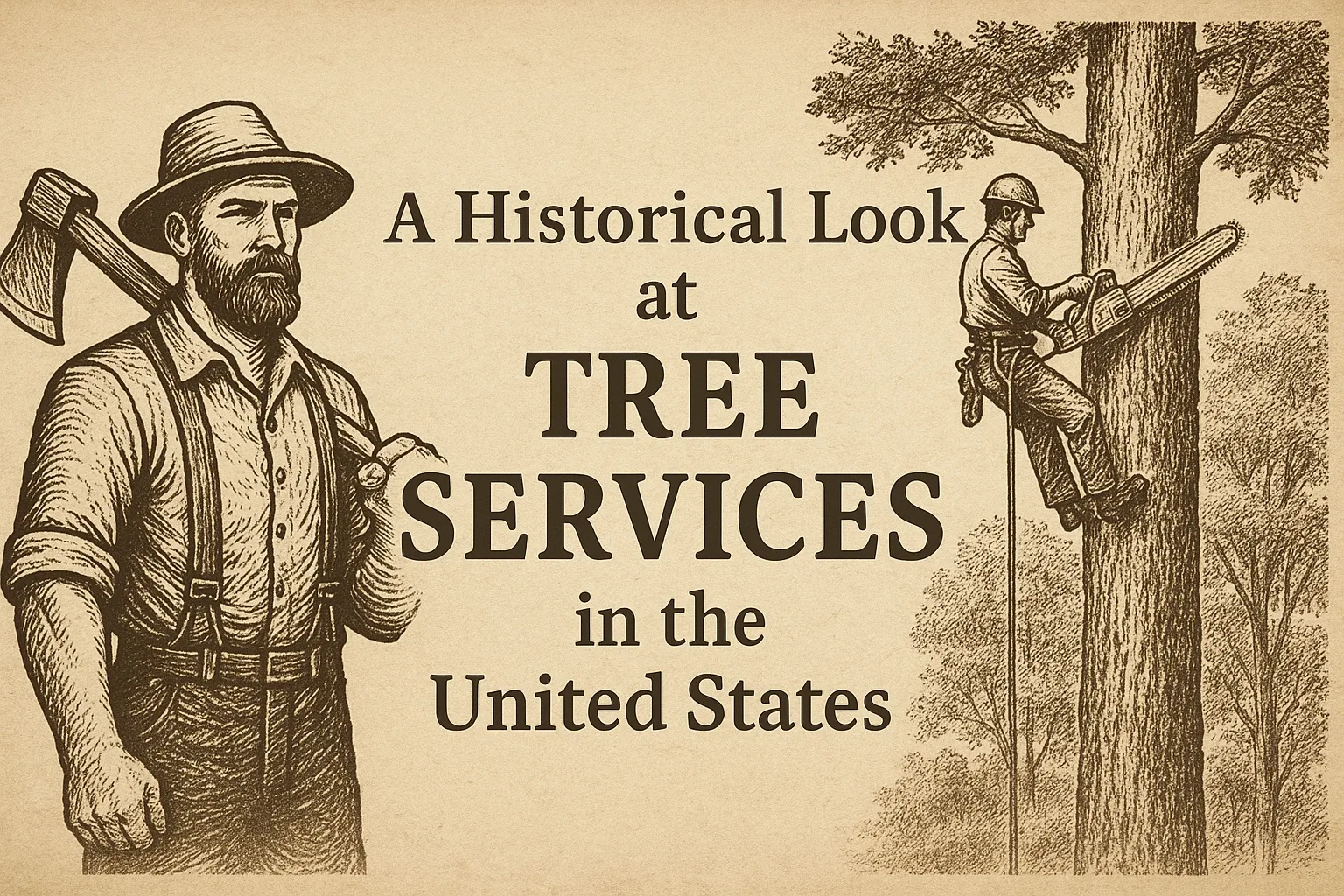
The management, maintenance, and removal of trees has been an essential part of American life since the earliest days of settlement. What we now call “tree services” has evolved from frontier survival work into a specialized industry that balances environmental stewardship, public safety, and aesthetic care.
Early Beginnings: Colonial and Frontier Eras
In the 1600s and 1700s, settlers cleared forests primarily for farmland and timber. Tree work was not yet a profession—it was a necessity. Communities relied on loggers, farmers, and general laborers to fell trees, split firewood, and remove hazardous limbs. Little consideration was given to long-term care or preservation; the priority was clearing land for agriculture and building materials.
The Rise of Arboriculture in the 19th Century
As American cities grew in the 1800s, urban landscapes began to change. The introduction of public parks and tree-lined streets brought new demands for professional care. Arboriculture—the study and care of trees—emerged as a recognized discipline, particularly with the influence of Frederick Law Olmsted’s park designs. Tree planting, pruning, and pest management became services offered not just to municipalities but also to wealthy landowners.
Industrialization and Professionalization in the 20th Century
The 20th century marked a turning point for the tree service industry. With the invention of gasoline-powered chainsaws, stump grinders, and aerial lifts, tree work became faster and more efficient. The industry also became more dangerous, which led to the development of safety standards and certifications. Organizations such as the International Society of Arboriculture (ISA), founded in 1924, played a pivotal role in standardizing practices and promoting professional education.
Companies specializing exclusively in tree work—rather than general landscaping—began to emerge nationwide. Businesses like West Coast Tree Service exemplify this trend, offering expertise in pruning, removal, and storm damage cleanup while maintaining a focus on sustainability and urban forest health.
Environmental Awareness and the Modern Era
By the late 20th century, environmental movements reshaped public attitudes toward trees. Instead of simply removing trees for convenience or development, homeowners and municipalities began investing in preservation. Services such as tree risk assessments, disease treatment, and cabling or bracing to prolong a tree’s life became more common. Urban forestry programs, supported by federal and state initiatives, emphasized the ecological benefits of trees—shade, carbon sequestration, and stormwater management.
Tree Services Today
Today, tree service companies combine traditional skills with modern science and technology. Drones are sometimes used to inspect tree canopies, GIS mapping helps manage urban forests, and eco-friendly practices guide pruning and removal decisions. The industry continues to balance public safety with environmental responsibility, ensuring that trees remain a vital part of both rural and urban American life.
From frontier woodcutting to high-tech arboriculture, the history of tree services in the United States reflects broader shifts in culture, technology, and environmental awareness. Companies like West Coast Tree Service carry forward this tradition, adapting to modern needs while honoring the deep-rooted connection between people and trees.