Why Build a Garage in Edmonton?
Complete Garage and Construction https://www.completegarages.ca/ in Edmonton is one of the local companies that would be approached to do the design, permitting, construction, and even demolition in case it is required. Specifically, they also provide a cost calculator tool on their site to enable homeowners to estimate the cost of their project. In the following, I will take you through:
- The common procedures in building a garage in Edmonton.
- The Complete Garage and Construction cost calculator is used in the following way.
- A little history of garages (a little old engineering history to put it in context)
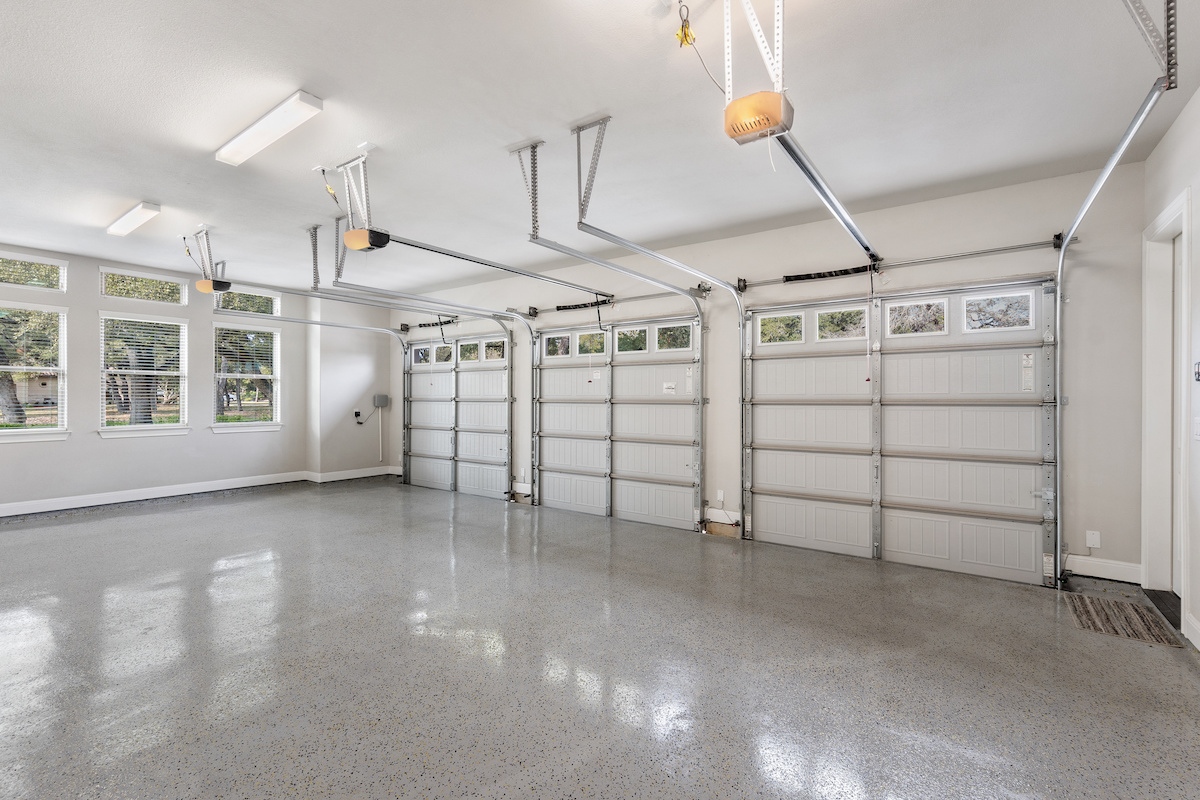
The climate of Edmonton, with its cold winters, snow, freeze-thaw, and frequent heavy rain, makes a well-designed garage a very welcome addition to the homeowner. A garage is a place to store your cars, provide storage and may be an extension of your living quarters (e.g. workshop, hobby room). However, the construction of a garage in Edmonton is a matter of planning: the compliance with regulations, the structural issues (soil, drainage, frost depth), insulation, and the choice of the finishing are all involved.
Constructions in Building a Garage in Edmonton.
The following is a rough roadmap of the way a garage project could work in Edmonton (or most Canadian cities). The real order or other procedures can change according to the conditions of the site, local regulations, and the working process of the builder.
| Phase | Key Activities / Considerations |
|---|---|
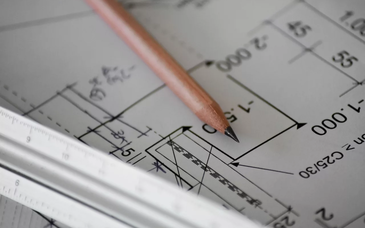
| 1. Preliminary planning & design | – Assess site (access, slope, drainage, setbacks) – Choose garage type (detached vs attached, size, height, footprint) – Decide on materials, finishes, insulation, door types, windows, electrical, heating – Work with an architect or designer (or the builder’s in-house design) |
| 2. Permits, approvals & site preparation | – Apply for municipal building permits, demolition permits (if there is an existing structure) – Confirm zoning, property lines, utility clearances – Site clearing, grading, excavation, soil testing – Prepare foundation layout and stake out building location |
| 3. Foundation & structural work | – Pour concrete footings and slab (or frost-protected shallow foundations) – Install drainage / waterproofing – Erect walls (framing, structural supports) – Roofing system (trusses or rafters) and sheathing |
| 4. Exterior & envelope | – Sheathing, weather barrier, siding, trim – Roofing covering (shingles, metal roofing, etc.) – Insulation, vapor barriers – Windows, garage door(s), entry doors – Exterior lighting, gutters, downspouts |
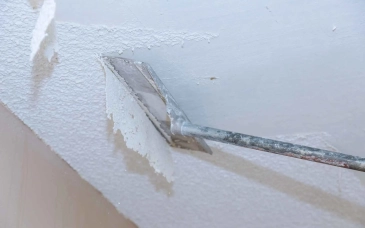
| 5. Interior work & utilities | – Electrical wiring and lighting – HVAC or heating (if needed) – Interior finishes (drywall, painting, flooring) – Plumbing (if including sinks or wash areas) – Installing insulation, ventilation, vapor control |
| 6. Final inspections & completion | – Municipal inspections at required stages – Finishing touches (trim, hardware, sealing) – Clean-up, landscaping re-grading – Final occupancy or use approval |
One should remember a couple of Edmonton-related or cold-climate considerations:
- In Edmonton, a new detached garage and demolition of an existing one needs a permit to be done. Complete Garage & Construction says that they handle all the permitting, and compliance with the local building codes and zoning laws.
- Due to the frost and freeze-thaw, the foundation should be made in such a way that it can withstand the frost heave and the drainage surrounding the structure should also be properly engineered.
- Shifting of soil or drainage problems will have to be frequently expected (and prevented) before serious structural work. Complete Garage & Construction boasts of designing garages in a way that such problems are preempted.
- Insulation, appropriate sealing and perhaps radiant or other means of heating are the main factors in a garage that is more than a mere cold shelter in the chilly winters of Edmonton.
Complete Garage & Construction deals with old garage demolition (where necessary), clean up of the site, and complete project management.
Also of interest: another large civic-scale garage, the Centennial Garage (of transit buses), was constructed in Edmonton between 2008 and 2010, and has numerous green-building characteristics, with a cost of approximately 99 million dollars. Such massive infrastructure highlights some of the engineering, structural, and materials issues even larger garages have to overcome in Edmonton.
Garage Construction Cost Estimation with the Complete Garage and Construction Cost Calculator.
The Complete Garage and Construction site has a Cost Calculator page that is one of the useful resources. The following is a step-by-step instruction on how a homeowner may apply that tool (according to some common conventions of cost calculators), tips and caveats.
Step-by-Step Use
- Go to the calculator page. https://www.completegarages.ca/cost-calculator/
Visit the Complete Garage and Construction site and select the menu item or click on Cost Calculator. The URL is:- Enter your preferred garage specifications.
- The calculator usually requires the following inputs:
- Garage size (width, depth, height)
- Garage doors (amount and size)
- Garage type (attached, detached or garage suite)
- Wanted finishes (insulation, flooring, drywall, heating)
- Basic, mid, premium level of interior finish.
- Other features (plumbing, electrical, windows, second floor)
- Conditions of the site (sloping ground, inaccessible)
- Look at the breakdown / detailed cost.
The tool can give categories of costs (foundation, framing, exterior, interior, finishes, labor) to give you a picture of where your budget is going. - Get a more accurate estimate / place an order.
The calculator is an approximation. To be more precise, site-specific quote, the tool will often provide a feature such as "Get a quote" or "Request estimate." Complete Garage and Construction invites clients to make contact with them and have a free consultation. - Calculate inputs to view what-if scenarios.
You can explore various sizes, finish options or features to explore cost trade-offs (e.g. insulation, a window, or high-end siding).
Tips, Limitations & Best Practices.
- It is an approximation, not a sure bid. Actual costs may vary due to unnoticed circumstances (soil quality, utility connections, permit delays, weather, site access).
- Geographical considerations are important. When your lot is hilly, has bad soil, is difficult to access, or contains rocks to clear, those expenses might not be reflected in a generic calculator.
- Changes in the price of the materials. Lumber, steel, concrete, insulation, and labor costs may change considerably with time.
- Local codes & permits. Permit charges, inspection charges or upgrades necessary (e.g. fire separation, lot drainage) are different in each municipality and may not be fully reflected.
- Always ask a builder to quote in detail. When you like a setup, request a complete written quote of garage builders edmonton or any other contractor, that includes allowances and contingencies.
- Calculator is a planning tool. It assists you in budgeting, making expectations, and making scope decisions.
The initial cost calculated in the calculator can be added to consultations and site visits to come up with a more stable budget and ultimately a concrete contract of construction.
Fun and Surprising History: Garages (and Early Engineering)
To make the article more entertaining, the following historical and ancient tidbits will add to your point of view:
The history of the Garage and Garage Door.
- The word garage is of French origin, and it is a derivative of the word garer, which means to cover or to protect.
- Prior to the automobile age, carriage houses used to play a similar purpose: they were used to store horse-drawn carriages, tack, and even horses. The architecture and the purpose developed over time to what we currently refer to as garages.
- C. G. Johnson invented the overhead garage door that opens upwards rather than swinging outwards around 1921.
- The first electric garage door opener was launched in 1926 and it served to assist homeowners to avoid the heavy wooden doors that had to be raised manually.
- There were similar structures in the old times, called garage doors: gatehouses and fortified doors to guard chariots or store in the walls of cities. Other sources indicate that early gatehouses with steel gates around 450 BC were practical equivalents of modern garage doors.
Ancient Engineering Highlights (Beyond Garages).
In further perspective to all this, engineering and construction are very ancient. The following are some of the interesting ancient facts:
- Schematics of automatic doors (e.g. at the entrance to a temple) that operated on steam power and mechanical linkages were developed by Heron of Alexandria (1st century AD).
- The lever, inclined plane (ramp), wedge, wheel and axle, etc., of the six classical simple machines, had been known in ancient civilizations (e.g. Mesopotamia and Egypt) and were applied in large-scale construction projects (e.g. pyramids, ziggurats).
- The ancient Greek and Roman times saw the development of surveying, geometry and structural principles. Gears systems, screws and water-lifting (such as the screw of Archimedes) were used by the Greeks and form the basis of many mechanical principles that are employed in modern construction machines.
- A historical comment: Chersiphron and Son were ancient engineers who constructed some of the Temple of Artemis (one of the Seven Wonders of the Ancient World) in terms of inclined planes, sandbags, and ingeniously rolling columns as rollers, essentially applying mechanical advantage thousands of years before modern cranes.
Thus, when you are designing a seemingly prosaic building such as a garage, the long history of building and mechanical genius is just behind you.
Next Steps
The construction of a garage in Edmonton is a complex, technical, and controlled procedure. An estimate of the cost and planning framework can be obtained by using a tool such as the cost calculator of Complete Garage and Construction. To have a good budget and a successful build, you will want to:
- Enter the calculator to browse.
- Get on-site quotes with the builder (Complete Garage and Construction or others).
- Make sure about permits, local codes, soil inspection and drainage.
- Consider the finishes and insulation selection in the climate of Edmonton.
I can take you through an example (say a 24 x 24 detached garage in Edmonton) with the calculator estimates and compare it with actual bids of local builders. Do you want me to do that next?