Why Studying the Bible Still Matters in the Digital Age

In a world overflowing with information, we often scroll through endless feeds searching for something meaningful - something real. Yet amid the noise, one book continues to change lives generation after generation: the Bible. Studying the Bible isn’t simply a religious habit; it’s an invitation to encounter truth, wisdom, and direction that remain timeless.

Rediscovering depth in a fast world

Our modern rhythm rewards speed - quick updates, instant results, short attention spans. But spiritual growth has never worked that way. The Bible asks for stillness and reflection. It invites you to slow down and notice how ancient words still speak to modern hearts. When you study Scripture, you learn to pause, to think, and to let truth shape your character rather than your emotions.

More than knowledge - transformation

Many people approach the Bible as a textbook, expecting to collect facts or memorize verses. But its purpose is far deeper. The Bible reveals who God is and how we’re meant to live in relationship with Him and one another. Studying it reshapes priorities, brings peace into conflict, and helps us recognize purpose where we once saw only chaos.
The transformation it creates doesn’t happen overnight - it happens step by step, one passage at a time, one prayer at a time. That’s where platforms like BibleStep come in: designed to make daily Scripture study feel approachable, gentle, and consistent.

A daily rhythm of renewal

You don’t have to read chapters upon chapters each morning. Sometimes, one verse is enough. The key is consistency - taking one small step each day. BibleStep embraces that principle: offering verses, definitions, reflections, and short stories that make the Word feel alive in the moments you actually live.
Imagine beginning your day not with notifications, but with a verse reminding you of grace. Or ending the night by reflecting on a story of forgiveness that shifts your heart. Small rhythms like these gradually change how you think and respond to the world.

Understanding through context

Studying the Bible also means learning its background - history, culture, and language. The more you understand the setting, the more powerful the message becomes. When you see how the first disciples lived, or how the psalmists expressed raw emotion centuries ago, Scripture stops feeling distant. It becomes personal.

Strength for uncertain times

The Bible has survived wars, persecution, and centuries of change because its message outlasts circumstances. In moments of confusion, the Psalms offer honesty and hope. In seasons of fear, the Gospels speak of peace and courage. When life feels unstable, returning to the Word provides an anchor - something unshakable in an unpredictable world.

Community around the Word

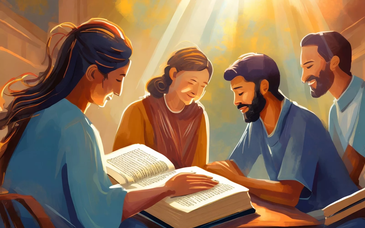
Bible study isn’t meant to be isolated. Discussing verses with others, asking questions, or sharing reflections connects you to a wider faith community. We see it throughout history: people gathering around Scripture to find wisdom, accountability, and love. BibleStep aims to rekindle that sense of togetherness online - not replacing real fellowship, but extending it digitally with grace and sincerity.

Taking the next step

If you’ve ever felt distant from faith, unsure where to begin, or simply overwhelmed by the size of the Bible - start small. Choose one verse. Ask one question. Take one step. That’s enough.
BibleStep was created for moments like these - when you’re ready to reconnect, but need a calm, guided space to do it. Whether you’re opening the Bible for the first time or returning after years away, you’ll find gentle structure, warm design, and content that meets you where you are.

Final thought

Studying the Bible is more than an intellectual pursuit; it’s a lifelong conversation with God. Every verse is a chance to understand love more clearly and live it more deeply. The goal isn’t to finish reading - it’s to keep growing.
So slow down. Read with intention. Let each word guide your next step.
And if you’re looking for a peaceful way to begin, BibleStep is here to walk with you - one verse, one reflection, one step at a time.

You Might Also Like:

The Athanasian Creed

The Athanasian Creed, also known as Quicunque Vult or Fides Catholica, is named after Athanasius, a bishop of Alexandria. Athanasius was famous for defending orthodoxy against Arianism. The Athanasian Creed was probably not composed until several decades after Athanasius’ death in AD 373 and has nev...
Read More

The Christian Reconquista In Spain

The unification of Spain was by a different route than that of either France or England. The customary rivalry between the feudal aristocracy and the royal authority was complicated by another significant element - a religious crusade. National unification required the ejection of the Muslims, with ...
Read More

Origin of the Bible related image
Read More

Origin of the Bible

Origin The Bible is more wonderful and unique than any other book in the world. This is apparent from a variety of ways. No one man or group of men planned the Bible. It was written in different lands over a period of 1600 years. The very existence of such a book is an overwhelming proof that the B...
Read More

Extra-biblical references to Jesus and Christianity

The following are early extra-biblical references to Jesus and/or Christians by non-Christian writers (in some cases, Christian writers are quoting non-Christian writers' references to Jesus). Quotes are copied from the accompanying links, unless otherwise noted. Within the text of the article, auth...
Read More

Portuguese voyages, 1336 to 1526 related image
Read More

Portuguese voyages, 1336 to 1526

Portuguese ahead of other Europeans in Africa and Asia Portuguese Maritime TradePortuguese inland in Africa in the early 1500sExpansion and Slave Trading from Luanda Portuguese voyages: places with first arrival dates Portuguese Expansion in the early 1500s By 1500, the Portuguese had already sailed...
Read More

The Mysteries of Our Faith

Ephesians 3:3-6 In the traditional communion liturgy used by Roman Catholics, Lutherans, Anglicans, and many others, there is a time when the officiant raises the bread and wine of communion and says, “Let us proclaim the mystery of our faith!” And the people respond in unison with one of the most a...
Read More

Resources related image
Read More

Resources

When studying the Bible, it is important to have access to reliable resources and references to help deepen one's understanding and knowledge of the text. There are a variety of resources available to those interested in exploring the Bible, including commentaries, study guides, and dictionaries. On...
Read More

Bible Lessons related image
Read More

Bible Lessons

Welcome to our enriching "Bible Lessons" section, where we embark on a journey of spiritual exploration and understanding. Delve into a diverse array of thought-provoking posts that offer profound insights from a biblical perspective. Our collection covers an array of topics, ranging from profound t...
Read More

Christianity related image
Read More

Christianity

On a late afternoon, around the year 32 A.D., two men were walking from Jerusalem to the nearby village of Emmaus. Their conversation centered on notable events that had occurred the previous week. As they journeyed, they were joined by a stranger who seemed ignorant of these events. Surprised, they...
Read More

Bible History Timeline related image
Read More

Bible History Timeline

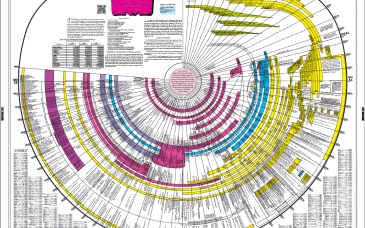
Below is a list of some historical events that are important to the study of the Bible and its prophecies. The research for this Biblical history timeline was done by George Konig and Ray Konig, authors of the book, 100 Prophecies: Ancient Biblical prophecies that foretold the future. Scholars vary ...
Read More

Timeline: the development of Christianity

Timelines: the development of (Western) Christianity, the emergence of Christian Scriptures, and the history of Biblical manuscripts, interpretation, and authority Dr. Charles Ess, Drury University Approximate date/sEvent / PeriodBible reference / concept / source20's C.E.Jesus and his followers - "...
Read More

Latin Quotes and Latin Phrases related image
Read More

Latin Quotes and Latin Phrases

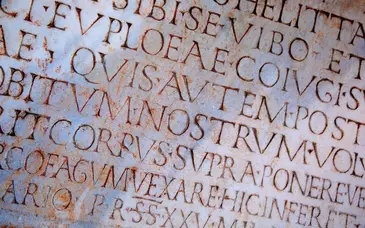
A - B - C - D - E - F - G - H - I - J - L - M - N - O - P - Q - R - S - T - U - V The Bible is a text that has been translated into many languages throughout history, including Latin. Latin was the language of the Roman Empire and was widely spoken and understood throughout the Mediterranean world, ...
Read More

Christian Evidences related image
Read More

Christian Evidences

Christian evidences refer to the various arguments, facts, and historical data that support the truth claims of Christianity. These evidences are used by Christians to demonstrate the validity of their faith and to defend it against skeptics and critics. One of the most important pieces of evidence ...
Read More

Christianity And Judaism

Christianity is the fulfillment of Judaism. The many Messianic prophecies of the Hebrew Scriptures were fulfilled in Jesus Christ. Judaism is incomplete without Him, and cannot make sense if His claim to be the Messiah is rejected. The New Testament, or New Covenant, is a fulfillment of Jeremiah's p...
Read More

Christianity And Islam

According to Islamic teaching, Muhammed was the last of many prophets, including Abraham, Moses, Samuel, Isaiah, and Jesus. Muhammed was born in A.D. 571 at Mecca in Arabia. His father died a few days after he was born, and his mother died when he was six years old. His grandfather then cared for hi...
Read More

Christianity And Hinduism

There are many forms and expressions of Hinduism. Associated with Hinduism are at least several hundred images of God. Houston Smith has written of these images: Valued as ends in themselves these could, of course, usurp God's place, but this is not their intent. . . . It is clumsy to confuse Hindu...
Read More

Christianity And Buddhism

Buddhism was spawned in a Hindu environment, and therefore has some similarities to Hinduism. Just as is the case for Hinduism, there are countless forms and expressions of Buddhism. Many of the same criticisms that are used against Hinduism have been used against Buddhism. "Buddha" is a word which ...
Read More