Roman Empire's Widespread Use of Lead Lowered IQ Levels Across Europe, Study Reveals

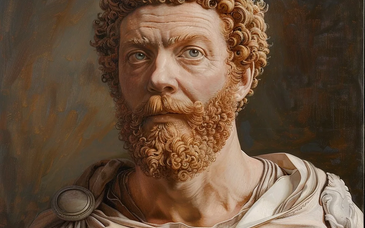
Roman Empire's Widespread Use of Lead Lowered IQ Levels Across Europe, Study Reveals hero image

The Roman Empire’s achievements in infrastructure, sanitation, public health, and governance are widely celebrated. However, alongside these advancements, a recent study highlights a darker legacy: widespread lead pollution that caused an estimated 2- to 3-point drop in IQ across Europe during the Pax Romana.

The findings, published in the Proceedings of the National Academy of Sciences, suggest that the vast expansion of mining and metal processing during the Roman Empire significantly increased airborne lead pollution, affecting the health and cognitive development of populations across the continent.

The Scale of Roman Lead Pollution

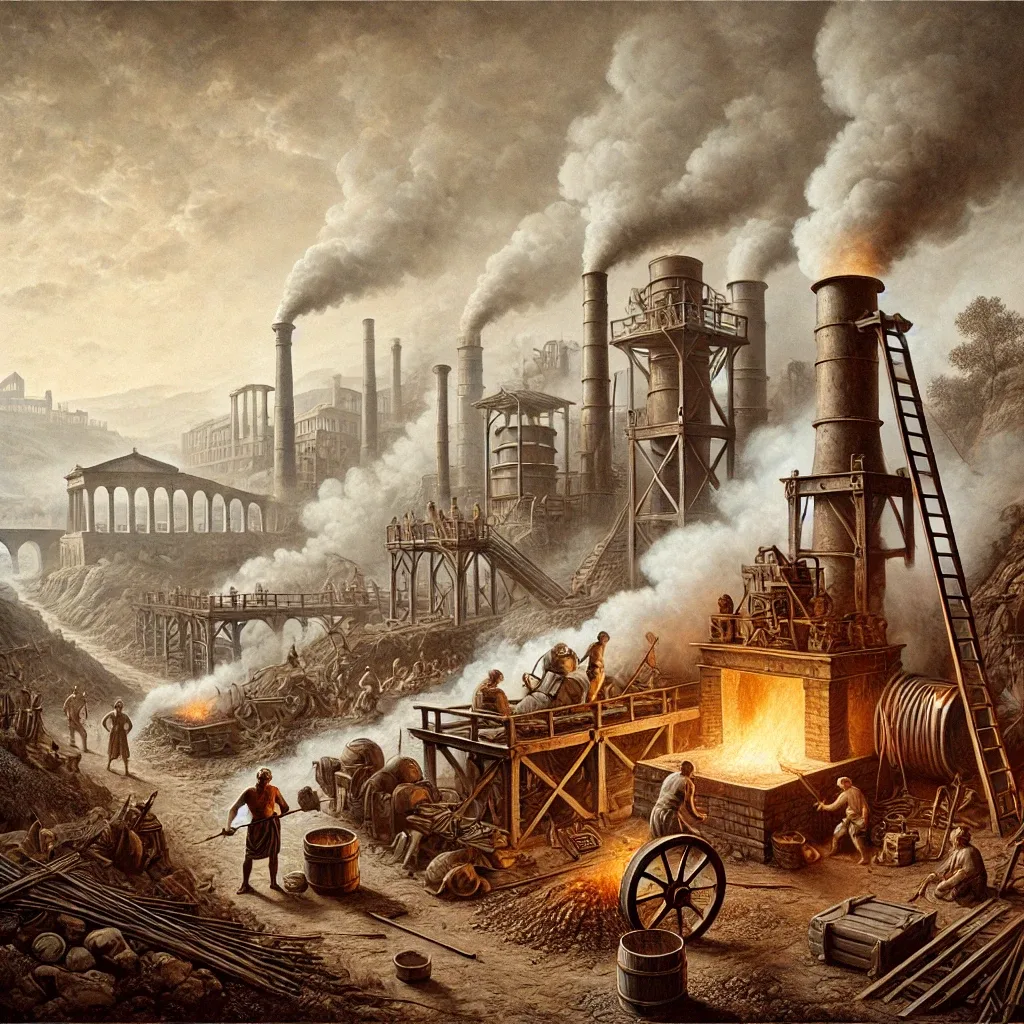
Researchers traced the origins of this pollution to the empire’s booming metal industry, particularly its massive mining and smelting operations. Lead, a byproduct of refining silver and gold, was not only a pollutant but a widely used material in Roman daily life. It appeared in water pipes, cookware, cosmetics, toys, and even in wine preservation, as Romans discovered lead-based syrups could sweeten and extend the shelf life of their beverages.

Dr. Joseph McConnell of the Desert Research Institute in Nevada, the study's lead author, described the findings as profound. "It’s amazing that we could quantify air pollution levels from nearly 2,000 years ago and assess their health impacts on ancient Roman civilization," he said. "This study shows that industrial activities have been damaging human health for over two millennia."

Quantifying the Impact

The researchers analyzed ice cores drilled from the Arctic to measure historical lead concentrations in the atmosphere. The data revealed a dramatic increase in lead pollution around 15 BC, coinciding with the rise of the Roman Empire. These elevated levels persisted for nearly 180 years, peaking during the Pax Romana—a period of relative peace and prosperity that ended in AD 180. Over this time, the empire released an estimated half a million tonnes of lead into the atmosphere.

Using atmospheric models, the researchers mapped how lead particles spread across Europe. Modern studies on lead toxicity provided further insights into how these pollution levels likely affected human health. At its peak, lead exposure in children could have caused blood lead levels to rise by approximately 2.4 micrograms per deciliter, resulting in an average IQ reduction of 2.5 to 3 points. Accounting for background exposure, children’s blood lead levels may have reached 3.5 micrograms per deciliter—levels known to impair cognitive function.

A Population-Wide Decline in Cognitive Ability

With the Roman Empire’s population estimated at 80 million during its height, nearly a quarter of the world’s people may have been exposed to harmful lead pollution. The cognitive effects, while seemingly small on an individual level, would have compounded across an entire population over nearly two centuries.

"A 2.5- to 3-point reduction in IQ across the population is significant, especially when sustained for 180 years," McConnell noted. "Whether these health impacts influenced the course of history is a question for historians and archaeologists."

Lead’s Lingering Legacy

Lead pollution didn’t disappear with the fall of Rome. While airborne lead levels decreased during the early medieval period, they surged again in the High Middle Ages and peaked during the 20th century with industrialization and the widespread use of leaded fuels.

Modern regulations have mitigated the effects of lead pollution. For instance, a 2021 study by the Centers for Disease Control and Prevention (CDC) found that blood lead levels in U.S. children dropped dramatically from 15.2 micrograms per deciliter in the late 1970s to 0.83 micrograms per deciliter by 2016, following the banning of leaded fuels.

A Health Warning Echoing Through History

The Roman experience serves as a cautionary tale of how industrial progress can harm public health. Despite their awareness of lead’s dangers—some Roman physicians recognized its toxic effects—the empire continued to rely heavily on the metal.

As McConnell and his team demonstrate, the consequences of this reliance were far-reaching, affecting not just the Roman population but leaving a toxic legacy that persisted for centuries. Today, the study serves as a reminder of the importance of balancing technological advancements with environmental and public health considerations.
You Might Also Like:

Ancient Cultures related image
Read More

Ancient Cultures

The ancient cultures section features many of the world's ancient cultures/empires. Presented with each is a brief history, a glossary, myths, rulers, and more. The Oriental Institute Museum is a showcase of the history, art and archaeology of the ancient Near East. An integral part of the Universit...
Read More

Agrippa

Marcus Agrippa Birth: 63 BC?Death: March 12 BC, Campania, Italy Overview Marcus Vipsanius Agrippa was a pivotal figure in the rise of the Roman Empire, serving as a powerful deputy to Augustus, Rome's first emperor. Known for his military prowess and administrative skill, Agrippa's efforts were inst...
Read More

Gaius Marius

Gaius Marius Marius, Gaius (circa 157-86BC), Roman general and statesman, who led the Populares during the civil war of 88-86BC. Caius Marius (died 86 B.C.E.) By PlutarchWritten 75 A.C.E.Translated by John Dryden We are altogether ignorant of any third name of Caius Marius; as also of Quintus Sertor ...
Read More

Marcus Aurelius related image
Read More

Marcus Aurelius

Marcus Aurelius (AD 121-180) A great task faced Marcus Aurelius when he became the Roman emperor in AD 161, as successor to his uncle, Emperor Antonius Pius. Generations of luxury had made the patricians, or nobles, weak and selfish. The middle class was disappearing, and the working class was being...
Read More

Northern Britain in the 5th Century AD

The eclipse of the Roman Empire in the West (c. 395-500) and the German migrations Invasions in the early 5th century The barbarian invasions. After the death of Theodosius the Western empire was governed by young Honorius. Stilicho, an experienced statesman and general, was charged with assisting...
Read More

The Roman Republic related image
Read More

The Roman Republic

The Latin words res publica which mean 'commonwealth' or 'state' is the source of today's term 'republic'.Rome was never a democracy as we would understand it today, nor as the Greeks understood it. For Roman society and the power within it was firmly divided by class.Most obviously, there was a div...
Read More

Rome related image
Read More

Rome

Ancient Rome was a powerful civilization that existed from 753 BCE to 476 CE. It was located in the central part of the Italian peninsula and was known for its military prowess, political and legal systems, and architectural and engineering achievements. Ancient Rome is considered to be one of the m...
Read More

The Roman Empire, 12 CE

The year 12 CE might not be the flashiest moment in Roman history, but it offers a fascinating snapshot of a powerful empire in its prime. We're not quite at the reign of Trajan, the period of maximum extent, but let's delve into what the Roman world looked like in this specific year.Augustus: Stil...
Read More

Ancient History related image
Read More

Ancient History

Ancient history is the study of the events, societies, and cultures of the past, generally before the fall of the Western Roman Empire in 476 CE. The study of ancient history provides insight into the development of human civilization and the origins of modern society. Ancient history is a vast and ...
Read More

Sumerian History

Pre-Sumerian Evidence of inhabitation of the lands that would become Sumer date prior to 5500 B.C. It is probable that earlier settlements existed, but the rising waters of the Persian Gulf forced the settlers further north. These initial settlements were located around the marsh lands of the south....
Read More

Roman Civilisation related image
Read More

Roman Civilisation

The Roman civilization was one of the most influential in world history, and its impact can still be felt today in areas such as politics, architecture, language, and law. The Roman Republic, which was established in 509 BCE, was the first known republic in the world, and it laid the foundation for ...
Read More

Rome

Rome, as the capital of the Roman empire, was the most important city. The city grew and so it became occupied by important buildings. These buildings are all built close to each other making a center for entertainment and other causes like political leaders going to the Forum. These buildings are t...
Read More

Coliseum

The Coliseum - a comparison of pictures taken during the 1960s and in August 1996... A Timeless Icon: The Colosseum Then and Now The Colosseum, a symbol of ancient Rome's power and grandeur, continues to captivate visitors centuries after its construction. Comparing photographs from different eras o...
Read More

The Pantheon related image
Read More

The Pantheon

The first time I saw the Pantheon, it seemed huge. The roof high above me with the light coming in lines was incredible as I had not yet seen such an incredible structure. When I went on the eleventh grade field week I saw it from the outside and even though I have grown I am still amazed at its bea...
Read More

Ancient Egypt related image
Read More

Ancient Egypt

Welcome to the ideal place to start exploring the wonders of the Ancient Egypt. Find out all about this amazing culture, and learn about the gods they worshiped, the Pharaohs that ruled and the tombs and statues they left behind. find out about Tutankhamun, Akhenaten and the other celebrities of t...
Read More