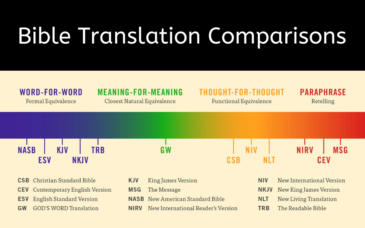
The New Revised Standard Version (NRSV) is one of the most respected Bible translations, known for its accuracy, inclusivity, and ecumenical appeal. However, you may have noticed two versions: the NRSV and the NRSV with the Apocrypha (NRSV CE). What sets them apart, and which one should you use? Let’s break down the differences.
1. What Is the NRSV?
The NRSV is a Protestant edition of the Bible, containing the 66 books of the Old and New Testaments recognized by most Protestant traditions. It is widely used for study, worship, and personal reading due to its scholarly precision and readable language.
2. What Is the NRSV CE?
The NRSV Common Edition (NRSV CE) includes the Apocrypha - a collection of deuterocanonical books accepted as Scripture by Catholic, Orthodox, and some Anglican traditions. These books are not part of the standard Protestant canon but are considered valuable for historical, theological, and devotional purposes.
Key Fact: The "CE" stands for "Common Edition", indicating its use across multiple Christian traditions.
3. The Main Difference: The Apocrypha
The primary difference between the NRSV and NRSV CE is the inclusion of the Apocryphal/Deuterocanonical books in the NRSV CE. These books include:
Apocryphal/Deuterocanonical Books in NRSV CE
| Book Name | Description |
|---|---|
| Tobit | A story of faith, prayer, and God’s providence. |
| Judith | A tale of courage and deliverance. |
| Additions to Esther | Additional prayers and details not in the Protestant book of Esther. |
| Wisdom of Solomon | A book of wisdom literature. |
| Sirach (Ecclesiasticus) | Teachings on wisdom, morality, and practical living. |
| Baruch | A prophetic book attributed to Baruch, Jeremiah’s scribe. |
| Letter of Jeremiah | A short letter warning against idolatry. |
| Prayer of Azariah | A prayer inserted into the book of Daniel. |
| Susanna | A story of Daniel’s wisdom and justice. |
| Bel and the Dragon | Additional stories about Daniel. |
| 1 Maccabees | Historical account of the Maccabean revolt. |
| 2 Maccabees | Further history of the Maccabees and the temple. |
| Prayer of Manasseh | A penitential prayer attributed to King Manasseh. |
| 1 Esdras | An alternative version of Ezra with additional material. |
| 2 Esdras | An apocalyptic book also known as 4 Ezra. |
| Additions to Daniel | Includes the Prayer of Azariah, Susanna, and Bel and the Dragon. |
4. Why Are These Books Included?
- Catholic and Orthodox Bibles consider these books canonical (part of the inspired Scriptures).
- Anglican/Episcopal traditions often use them for devotional and liturgical purposes.
- Protestant traditions generally view them as helpful but not authoritative for doctrine.
5. Textual Differences
- NRSV: Contains only the 66 books of the Protestant canon.
- NRSV CE: Includes the 66 books + the Apocrypha, making it suitable for ecumenical and interfaith use.
Note: The translation of the canonical books (66 books) is identical in both versions. The difference lies solely in the additional books.
6. Who Uses Each Version?
| Version | Primary Users | Use Case |
|---|---|---|
| NRSV | Protestants, Evangelicals | Personal study, Protestant worship, academia. |
| NRSV CE | Catholics, Orthodox, Anglicans/Episcopalians | Liturgical use, ecumenical study, academic research. |
7. Practical Implications
- For Protestants: The NRSV is typically preferred, as it aligns with the Protestant canon.
- For Catholics/Orthodox: The NRSV CE is often used in liturgies, personal devotion, and study, as it includes the full canon recognized by their traditions.
- For Academics and Ecumenical Settings: The NRSV CE is valuable for comparative study and discussions across denominational lines.
8. Which One Should You Choose?
- If you are Protestant and want a Bible that matches your tradition’s canon, choose the NRSV.
- If you are Catholic, Orthodox, or Anglican, or if you want to explore the Apocrypha, the NRSV CE is the better choice.
- If you are studying early Christian or Jewish history, the NRSV CE provides additional context and insight.
9. Common Misconceptions
- Myth: The NRSV CE is a "Catholic Bible." Fact: While it includes the Apocrypha, it is not officially approved by the Catholic Church (which uses the NRSV-CE with the imprimatur).
- Myth: The Apocrypha is not worth reading. Fact: These books offer historical, cultural, and theological richness, even for Protestants.
10. Where to Find Each Version
- NRSV: Available in most Protestant Bibles and study resources.
- NRSV CE: Often labeled as "NRSV with Apocrypha" or "NRSV Common Edition". Look for editions published by Oxford University Press or HarperCollins.
The NRSV and NRSV CE share the same core translation, but the NRSV CE includes the Apocrypha, making it more versatile for ecumenical and historical study. Your choice depends on your denominational background and purpose for using the Bible.
Pro Tip: If you’re unsure, consider getting both - the NRSV for daily reading and the NRSV CE for deeper study and historical context.