When it comes to choosing a Bible translation, accuracy is often the top priority for readers, scholars, and theologians. The New Revised Standard Version (NRSV), published in 1989, is widely respected for its balance of scholarly precision and readability. But is it the most accurate translation available? To answer this, we need to examine its translation philosophy, textual basis, and how it compares to other leading versions.
1. What Is the NRSV?
The NRSV is an update of the Revised Standard Version (RSV), which itself was a revision of the American Standard Version (ASV). It was produced by an ecumenical team of scholars and aims to be:
- Faithful to the original Hebrew, Aramaic, and Greek texts.
- Inclusive in language (using gender-neutral terms where appropriate).
- Accessible to modern readers while retaining literary quality.
2. Translation Philosophy: Formal vs. Functional Equivalence
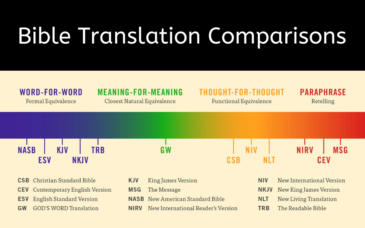
Bible translations generally fall on a spectrum between formal equivalence (word-for-word) and functional equivalence (thought-for-thought). The NRSV leans toward formal equivalence but includes elements of functional equivalence for clarity.
- Formal Equivalence: Stays as close as possible to the original wording and structure (e.g., NASB, ESV, KJV).
- Functional Equivalence: Prioritizes natural readability in the receptor language (e.g., NIV, NLT).
The NRSV strikes a middle ground, making it both accurate and readable.
3. Textual Basis: The Original Languages
The NRSV is based on the most ancient and reliable manuscripts, including:
- Hebrew Masoretic Text for the Old Testament.
- Greek Nestle-Aland/United Bible Societies’ text for the New Testament.
- Dead Sea Scrolls and other early texts for critical passages.
This textual foundation is shared by other modern translations like the ESV, NASB, and NIV, ensuring a high level of accuracy.
4. Strengths of the NRSV
A. Scholarly Rigor
- Translated by a diverse team of Protestant, Catholic, and Jewish scholars.
- Regularly updated to reflect the latest biblical scholarship and manuscript discoveries.
B. Inclusive Language
- Uses gender-neutral terms (e.g., "humanity" instead of "mankind") where the original text is generic or collective.
- Avoids male-dominated language when the context allows, making it more accessible to modern readers.
C. Literary Quality
- Retains the poetic and rhetorical beauty of the Bible, especially in books like Psalms and Isaiah.
- Preserves traditional theological terms (e.g., "grace," "justification") while clarifying archaic language.
D. Ecumenical Appeal
- Used widely in academic, liturgical, and interfaith settings.
- Preferred by many mainline Protestant, Catholic, and Orthodox communities.
5. How Does the NRSV Compare to Other Translations?
| Translation | Philosophy | Strengths | Weaknesses |
|---|---|---|---|
| NRSV | Balanced | Accurate, inclusive, literary | Slightly less literal than NASB/ESV |
| ESV | Formal Equivalence | Highly literal, conservative | Less gender-inclusive |
| NASB | Formal Equivalence | Most literal, precise | Stiff, less readable |
| NIV | Functional Equivalence | Highly readable, dynamic | Less literal, some paraphrasing |
| KJV | Formal Equivalence | Classic, poetic | Archaic language, outdated manuscripts |
Accuracy Ranking (Literal Faithfulness):
- NASB (most literal)
- ESV
- NRSV
- NIV
- NLT (most dynamic)
6. Criticisms of the NRSV
A. Gender-Inclusive Language
- Some conservative readers argue that gender-neutral terms (e.g., "brothers and sisters" instead of "brethren") alter the original meaning.
- Supporters counter that this reflects the intent of the original text, which often used generic terms.
B. Theological Nuances
- Occasionally renders passages differently than traditional translations (e.g., Isaiah 7:14 uses "young woman" instead of "virgin").
- Some evangelicals prefer the ESV or NASB for their stricter literalism.
C. Readability vs. Literalism
- While highly accurate, the NRSV is not as literal as the NASB or as fluid as the NIV.
7. Is the NRSV the Most Accurate?
It depends on what you mean by "accurate."
- For scholarly study and ecumenical use, the NRSV is among the most accurate and reliable.
- For strict literalism, the NASB or ESV may be preferred.
- For readability, the NIV or NLT are stronger choices.
Verdict: The NRSV is one of the most accurate translations available, especially for those who value both precision and inclusivity. However, no single translation is "perfect" - each has trade-offs.
8. Who Should Use the NRSV?
- Scholars and students who need a balanced, critical text.
- Liturgical communities (e.g., Episcopal, Lutheran, Catholic).
- Readers who want a translation that is both faithful and accessible.
9. Practical Tips for Choosing a Bible
- For deep study: Compare the NRSV with the ESV or NASB.
- For devotional reading: The NRSV or NIV are excellent choices.
- For memorization: The KJV or ESV may be preferred for their poetic cadence.
10. Final Recommendation
If you prioritize accuracy, inclusivity, and literary quality, the NRSV is an outstanding choice. For maximum literalism, consider the NASB or ESV. For ease of reading, the NIV or NLT may be better.
Pro Tip: Use multiple translations (e.g., NRSV + ESV) to gain a fuller understanding of the text.