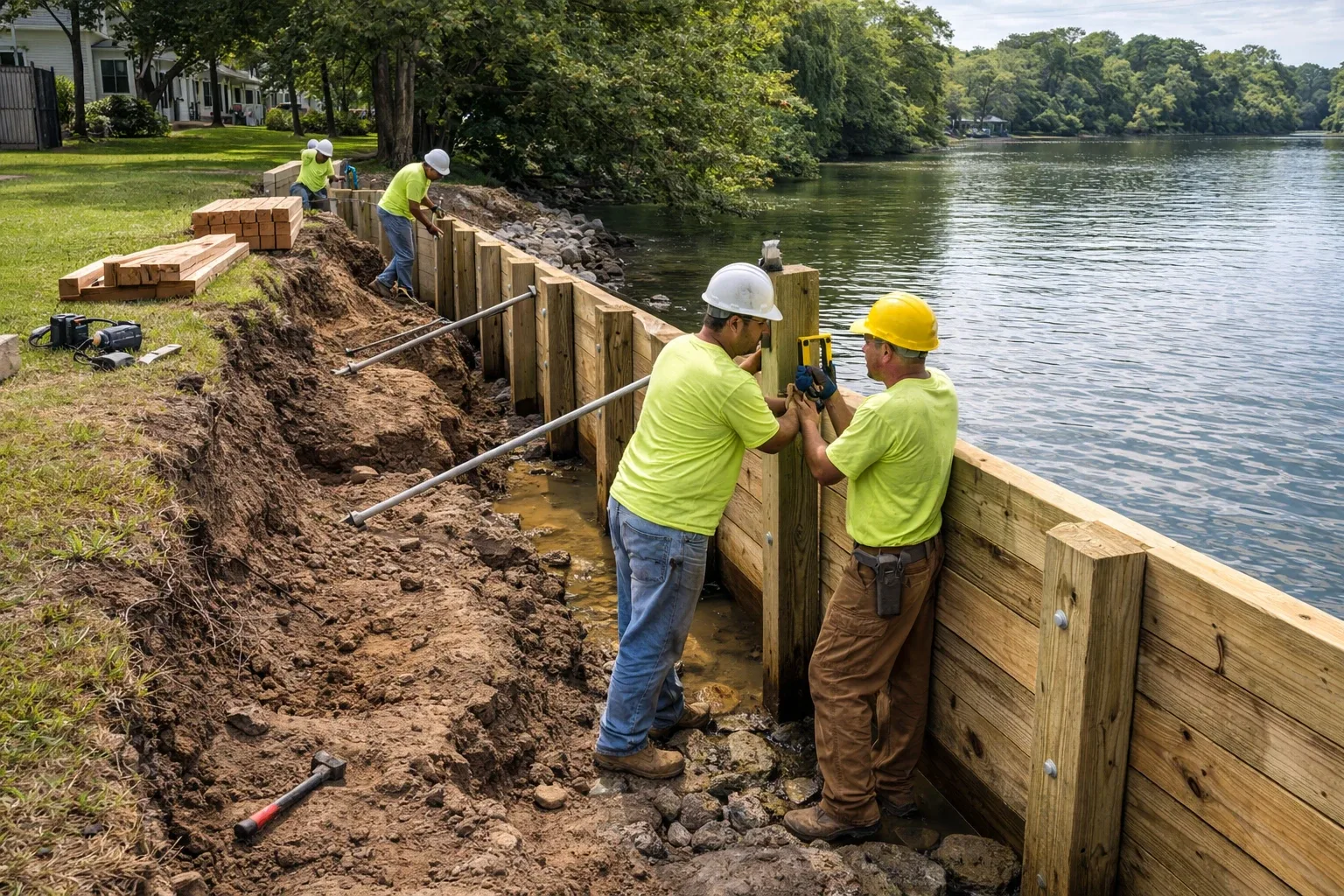
Bulkheads are designed to protect shoreline properties from erosion, but they do not last forever. Over time, exposure to water, soil pressure, and environmental conditions can weaken the structure. In Texas, where waterfront properties are exposed to fluctuating water levels, wave action, and soft soils, bulkhead deterioration can happen faster than expected if early warning signs are ignored.
Recognizing these signs early allows property owners to avoid major repairs or complete replacement. A detailed overview of repair options and cost factors can be found on the page bulkhead repair in Texas, where different types of damage and solutions are explained based on real shoreline conditions.
Why bulkheads fail over time
Bulkhead structures are constantly under pressure from both water and soil. This creates gradual stress that weakens the system over time, especially if the structure was not designed for the specific conditions of the site.
- Water exposure - постоянный контакт с водой разрушает материалы
- Soil pressure - грунт давит на конструкцию изнутри
- Drainage issues - накопление воды за bulkhead увеличивает нагрузку
- Wave impact - постоянные волны ослабляют конструкцию
- Material aging - естественное изнашивание материалов
Visible signs of bulkhead damage
Some of the most important warning signs can be identified without special tools. These indicators usually appear gradually but should never be ignored.
- Leaning or bowing of the bulkhead wall
- Cracks or separation between panels
- Rotting wood or corrosion on metal components
- Gaps forming between soil and structure
- Water leaking through the bulkhead
Hidden problems behind the structure
Not all damage is visible from the outside. In many cases, the most serious issues develop behind the bulkhead where soil and water interact.
- Loss of soil support behind the wall
- Improper drainage leading to water buildup
- Weakening of anchor systems
- Internal erosion of the backfill area
When repair is still possible
Bulkhead repair is often possible if damage is detected early. Addressing issues at this stage can extend the life of the structure without full replacement.
- Minor deformation - early-stage bending or shifting
- Localized damage - issues limited to specific sections
- Surface deterioration - material wear without structural failure
- Drainage problems - can be corrected before major damage occurs
When replacement becomes necessary
In some cases, repair is no longer enough. Structural failure requires a full replacement to ensure safety and long-term stability.
- Severe leaning or collapse of the structure
- Extensive material degradation
- Failure of support and anchoring systems
- Significant land loss behind the bulkhead
Common mistakes property owners make
Many shoreline problems become worse due to delayed action or incorrect decisions.
- Ignoring early warning signs
- Attempting temporary fixes instead of proper repair
- Choosing solutions that do not match site conditions
- Waiting until the structure is close to failure
How to prevent bulkhead damage
Preventive measures can significantly extend the lifespan of a bulkhead and reduce repair costs.
- Regular inspection of the structure
- Maintaining proper drainage behind the wall
- Addressing small issues immediately
- Using materials suitable for local conditions
- Monitoring changes in shoreline shape
Long-term impact of timely repair
Repairing a bulkhead before major failure not only protects the structure but also preserves the entire shoreline. Early intervention reduces costs, prevents land loss, and maintains property value.
Timely repair is always more cost-effective than full replacement and helps avoid emergency situations.
Final thoughts
Bulkhead repair in Texas should never be delayed once damage becomes visible. Each sign of deterioration indicates increasing risk for the structure and the surrounding property. Identifying problems early and taking action ensures long-term shoreline stability and protects your investment.