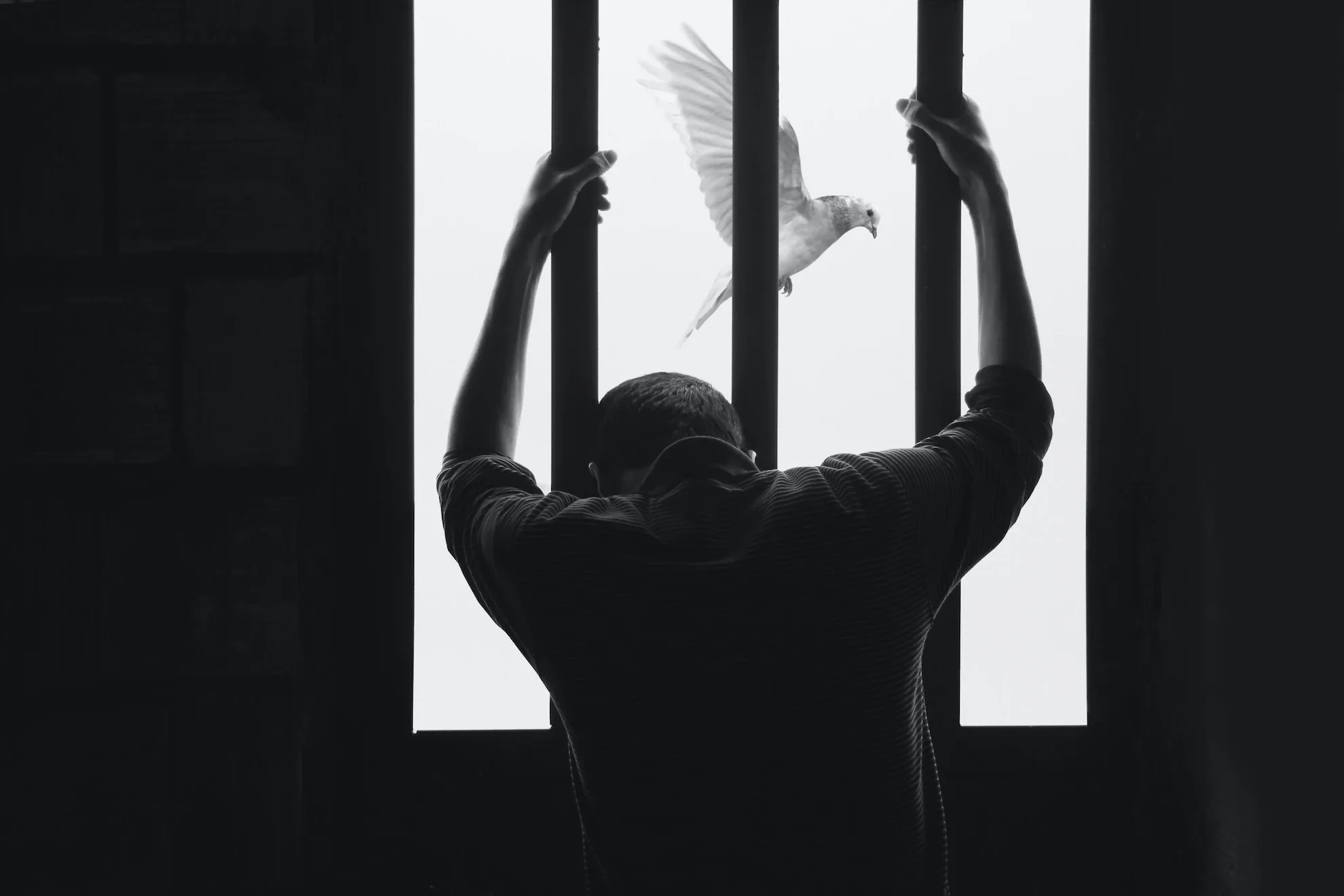
America's justice system faces a difficult question: what should happen to people who break the law, and what should happen after they have been punished? The scale of incarceration makes that question increasingly difficult to ignore. The system deals with nearly 2 million incarcerated individuals, while millions more pass through local jails each year. Behind those figures are people, families, victims, communities, and institutions trying to cope with the consequences of crime. Christianity offers a perspective that begins with the inherent dignity of every person. These principles can provide useful ways of thinking about the way the justice system carries out its work. In this article, let’s explore a few insights that could help improve some of the shortcomings with our justice system.
Reimagine Justice for Minor Offenses
One of the clearest challenges facing America's justice system appears at its entry point. According to data from the Prison Policy Initiative, there are almost 2 million people confined across U.S. prisons, jails, and other institutions. However, local jails are the “front door” of incarceration, with 7.6 million jail admissions per year, far exceeding prison admissions. One reason for these high numbers is that misdemeanors account for 13 million annual charges, which are trivial but still come with major consequences. However, the Bible highlights an insight we all forget. Leviticus 19:15 says, "Do not pervert justice; do not show partiality to the poor or favoritism to the great." This is a lesson the justice system really needs to remember again. For example, it’s been over 200 days since the Epstein files were released, and we’ve not seen a single arrest within the country. Meanwhile, courts throw people in jail every day for minor offenses.
Enforcing a Higher Standard for Those With Power
The question of justice does not end with the person accused or convicted of a crime. Correctional institutions also exercise enormous power over the people placed in their care. Officers, counselors, chaplains, administrators, supervisors, and other employees can profoundly affect the safety and well-being of incarcerated people, particularly when those people are young or otherwise vulnerable. We already know that abuse is sadly common in many institutional facilities. The U.S. Government Accountability Office noted that between 2014 and 2022, the Federal Bureau of Prisons (BOP) received ~8,500 allegations of sexual abuse. About 50% of allegations were against BOP employees, the rest against incarcerated individuals. Likewise, look at the ongoing Illinois juvenile detention center lawsuit situation. Many of the abuse allegations were made against chaplains, counselors, officers, and kitchen supervisors. These are people in positions of power, and Christianity teaches that leaders are held to a higher standard. Several verses in the Bible point to this: Luke 12:48: “To whom much is given, much will be required.” Titus 1:7: "For an overseer, as God's steward, must be above reproach." Clearly, when those in charge abuse their power, whether they be chaplains or officers, there need to be consequences. It might appear that this is being upheld, but on closer look, apparently, only in one direction. One of the plaintiffs' representatives accused the attorney general of having a double standard in regard to prosecution. He asserted that when it’s state employees who perpetrated the abuse rather than Catholic priests, the AG doesn’t want to support the victims. As TorHoerman Law notes, these ongoing lawsuits are part of a broad legal effort that involves over 800 individuals filing cases against the state. If the justice system were to learn one lesson, it’s to ensure abusers of power are never given a free pass.
Ensure Metanoia Has a Chance of Success
Christianity's emphasis on redemption becomes especially relevant when considering what should happen after someone has committed a serious crime and finished their sentence. The Christian understanding of repentance allows for the possibility that a person's future can differ profoundly from their past. Look at the story of Michael Franzese, a man who was once the underboss of the Colombo crime family. One day, while in prison, he was given a Bible, and after being influenced by his wife and her Christian family, embraced Christianity. Franzese eventually walked away from the mob and turned his life around, becoming a born-again Christian, author, and global speaker. His story illustrates the Christian concept of metanoia; a fundamental change of direction. The point is not that every person who enters prison will experience such a dramatic transformation. Rather, the people who do have the chance to live a renewed life should be able to. If a justice system preaches redemption while perpetually closing doors to honest work, it denies metanoia a fair chance in the real world. Ensuring that personal change leads to lasting success requires legal policies that protect a former offender’s right to rebuild. For instance, anti-discrimination and "fair-chance hiring" laws such as "Ban the Box" initiatives help ensure that qualified people are not automatically disqualified from employment. That principle can have practical applications. Faith-based rehabilitation programs can combine religious instruction with mentoring, education, vocational preparation, family support, and assistance with reintegration. Prison ministries can also provide relationships and communities that continue after release. Essentially, the lesson for the justice system here is that a transformed person can also contribute to the transformation of families and whole neighborhoods. They can serve as role models and prove that it’s possible to come back from a bad life and live righteously again.
Frequently Asked Questions
1. What does the Bible say about the purpose of punishment?
The Bible presents punishment as a response to wrongdoing, but it also emphasizes justice, correction, and restoration. Biblical teachings do not portray punishment as an excuse for cruelty. Accountability should be fair and proportionate, while people should still have opportunities to repent, change, and rebuild their lives.
2. What does the Bible say about second chances?
The Bible repeatedly presents second chances as part of God's relationship with humanity. Stories involving figures such as Peter, Paul, and Jonah show people failing, changing course, and continuing their lives with a renewed purpose. Christianity therefore places considerable emphasis on repentance, forgiveness, restoration, and the possibility of transformation.
3. What does the Bible say about protecting prisoners from abuse?
The Bible consistently calls for vulnerable and powerless people to be treated with justice and dignity. While it does not provide a modern prison policy, its teachings condemn oppression and mistreatment. Those responsible for prisoners have a moral duty to exercise authority responsibly and protect people in their care.
Key Numbers & Facts at a Glance
| People currently incarcerated in America | Nearly 2 million |
| Annual misdemeanor charges | 13 million |
| Annual jail admissions driven by misdemeanor charges | 7.6 million |
| Federal Bureau of Prisons sexual abuse allegations | ~8,500 |
| Allegations directed at employees | Approximately 50% |
America’s justice system is undoubtedly flawed and lacking in many areas. However, that isn’t all too different from the way we often fall short in the eyes of God. The important point is that we move forward and do things according to the manner God expects of us. That means faith and also action. Just as God balances absolute justice with boundless grace, an ideal justice system should do the same. It should hold all individuals accountable for their wrongs without destroying their potential for redemption. We might never come close to God’s level of balance, but we can still try.