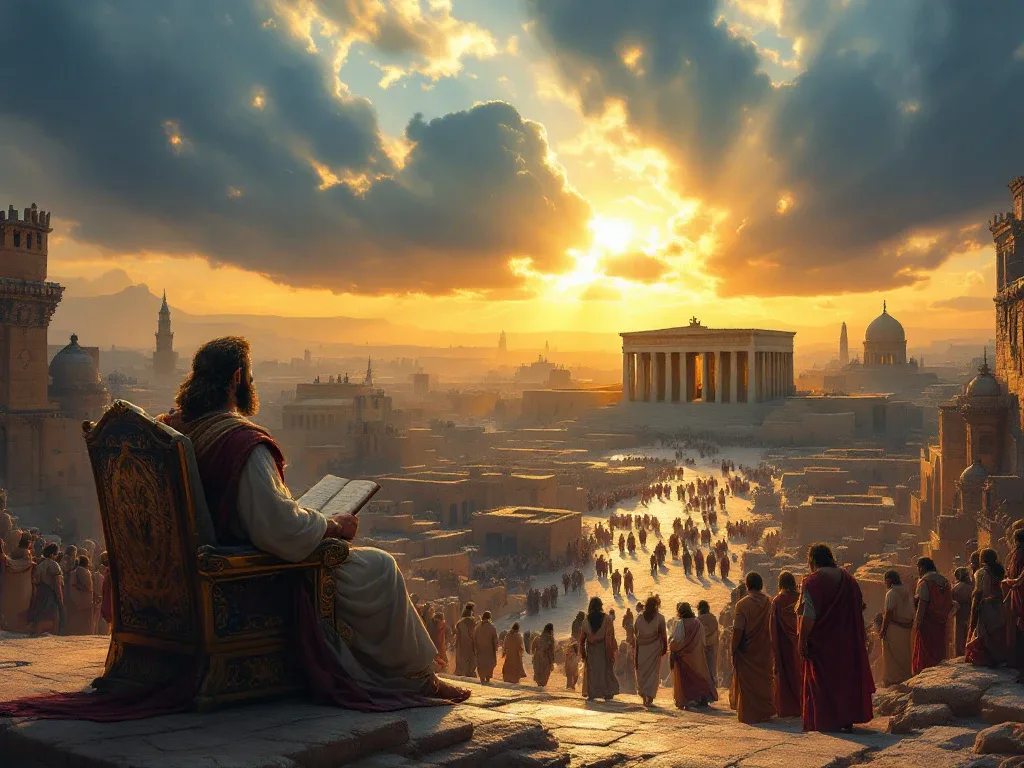
The Bible isn't just a spiritual book, it's also a book of political maneuvering, empires rising and falling, and the complexities of leadership. The Scriptures provide a wealth of political history from the united kingdom of Israel under David to the Israelites' exile in Babylon, which is relevant to today's governance and societal changes. Whether in ancient kingdoms or in the modern world, these stories are a reminder of the timeless themes of power, responsibility, and resilience.
Like nations and leaders in Bible times, people and families today experience transitions, such as relocating to a new city or state. The wisdom and perspective gained from these ancient political journeys can be valuable whether you're moving for a job, family, or a new beginning. When it comes to making the transition as smooth as possible, then working with a moving company Springfield or the best moving company can help you make the transition as smooth as possible.
The United Monarchy: Leadership and Unity
The book of David, a shepherd boy who became a King.
King David is one of the most famous political leaders in the Bible, who united the tribes of Israel into one kingdom. The Books of Samuel tell of a golden age of military triumph, cultural prosperity and political stability during his reign. David's skill in bringing the tribes of Israel together under one king established a model for effective, centralized governance.
- Historical Context: The dates of David's reign are traditionally set around 1000 BCE. The phrase "House of David" appears in external sources of information, including the Tel Dan Stele (9th century BCE).
- Scripture Reference: "He chose David his servant and took him from the sheep pens; from tending the sheep he brought him to be the shepherd of his people Jacob, of Israel his inheritance." - Psalm 78:70-71
David's story reminds us that good leadership is a combination of strength and humility. From shepherd to king, he came from a lowly place to a powerful one, and it is a reminder to us that great leaders can come from any source. As leaders and/or as those transitioning into new roles, we can take heart from David's example and step into our new roles with courage and integrity.
This is a book about King Solomon, his wisdom, and his prosperity.
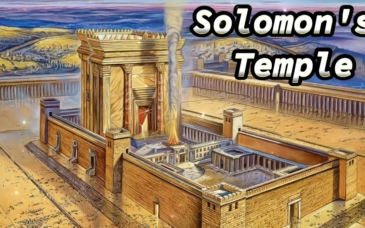
David's son Solomon inherited a prosperous kingdom and strengthened its power through wisdom, diplomacy and commerce. He is remembered for the building of the First Temple in Jerusalem, which was a symbol of national and spiritual unity.
- Historical Background: Solomon's reign is believed to have been between 970 and 931 B.C. During his reign the First Temple was built, serving as a place of worship and political power.
- Biblical Context: "God gave Solomon wisdom and very great insight, and a breadth of understanding as measureless as the sand on the seashore." - 1 Kings 4:29
Solomon's wisdom in governance and his capacity to maintain peace through alliances underscore the need for diplomacy and foresight. Whether you're a leader or a person moving with Springfield local movers, wisdom and preparation are essential in modern times.
Political Fragmentation (The Divided Kingdom)
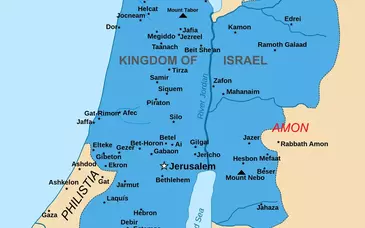
After Solomon’s death, the kingdom split into two: Israel in the north and Judah in the south. This division (1 Kings 12) was caused by political and leadership issues and pressures from outside. The divided monarchy eventually brought both countries to their knees, as they tried to hold their kingdom together and to fight off foreign invaders.
- Historical Context: The kingdom divided around 931 BCE. Israel was conquered by the Assyrian Empire in 722 BCE and Judah by the Babylonian empire in 597 BCE.
- Biblical Reference: "To your tents, Israel! Look after your own house, David!" - 1 Kings 12:16
The lessons to be learned from the divided kingdom are that disunity and poor leadership are dangerous. It is a reminder to us that in any community or nation, there must be cohesion and a sense of purpose. Likewise, if you're moving with family, friends or a best moving company, you need to coordinate and cooperate with one another in order to be successful.
The Babylonian Exile: Resilience in Adversity
The Fall of Judah and the Exile.
The Babylonian Exile (597-538 BCE) was a defining moment in the Bible's history. The best of the people of Judah were exiled to Babylon after the fall of Jerusalem to Nebuchadnezzar II. This exile was more than just physical; it was a spiritual and cultural crisis. But it was also the time of reflection, renewal and hope for restoration.
- Historical Background: The Babylonian Empire, ruled by Nebuchadnezzar II, was a powerful empire in the ancient Near East. The exile was ended by the conquest of Babylon in 539 BC by Cyrus the Great of Persia, who allowed the Israelites to return to Jerusalem.
- Biblical Reference: "For I know the plans I have for you, declares the Lord, plans for welfare and not for evil, to give you a future and a hope." - Jeremiah 29:11
The exile reminds us that in the darkest of days, there is hope for renewal through strength and faith. If you are in transition, whether it's your own or someone else's, this story is for you, and it's one of hope that better days are ahead. When you're ready to actually relocate, a moving company Springfield can help you get on solid footing for your new chapter.
The role of prophets is to bring hope.
Prophets such as Isaiah and Ezekiel were important during the exile to keep the people's faith and hope alive. They spoke of God's justice, mercy and the hope of restoration. These prophets told the exiles that their identity and purpose was not connected to where they were, but to God.
- Biblical Text: "Comfort, comfort my people, says your God. Speak tenderly to Jerusalem, and proclaim to her that her hard service has been completed, that her sin has been paid for." - Isaiah 40:1-2
The prophets' message is a reminder that leadership is not only about power, but also about hope and guidance in times of uncertainty. Whether you're a community leader or moving with local movers Springfield MA, it's important to have a vision and be compassionate.
The Roman Empire: Power and Faith
Jesus and the Political Climate of His Time
The New Testament is set in the context of the Roman Empire, a huge and mighty political power that controlled Judea when Jesus lived. There was a complicated political and religious situation between the Roman rule and the Jewish hopes for a Messiah.
- Historical Background: Judea was a Roman client kingdom in the 1st century BCE and a Roman province in 6 CE. Jesus' ministry was set against the backdrop of the Roman Empire's political and military power.
- Biblical Quote: "Render to Caesar the things that are Caesar’s, and to God the things that are God’s." - Matthew 22:21
Jesus' teachings frequently dealt with the balance between spiritual and earthly responsibilities. His message was not political, but rather one of love, justice and the kingdom of God. This is a two-fold message: we should be in the world, but we are not of the world. This balance is essential for anyone going through a transition, whether that's a change in leadership or a move to a new location, to keep their integrity and purpose alive.
The Early Church: A New Political Identity
The church in the early Christian era (as recounted in the book of Acts) had a number of political and social problems. The church flourished in spite of the persecution and established a new identity that was beyond ethnic and political boundaries.
- Historical context: The early church grew in the Roman Empire (1st and 2nd centuries CE) and sometimes faced opposition from the Roman authorities.
- Biblical Text: "They devoted themselves to the apostles’ teaching and to fellowship, to the breaking of bread and to prayer." - Acts 2:42
The early church's success in the face of challenges is a testament to the strength of community and shared purpose. Whether you're a member of a political movement or moving with the best moving company, the power of community and collaboration is undeniable.
Similarities with contemporary politics and transitions
The political narratives of the Bible provide insights for contemporary governance, leadership and societal change. These ancient stories can teach us about power and change in the modern world:
- Disunity can cause downfall as the story of the divided kingdom tells us. Politically, it is crucial to build unity and unity of purpose to ensure stability and progress.
- Leadership and Wisdom: The kings of Israel, such as David and Solomon, show that leadership and wisdom are needed. Their lessons in power and humility, and in planning for the future, are lessons that modern leaders can learn.
- Resilience in Adversity: The Babylonian Exile demonstrates that resilience and faith can result in renewal. Hope and a sense of purpose are important tools to help communities and individuals navigate challenges during times of crisis.
- Faith and Power: Jesus' teachings emphasize the need to balance earthly responsibilities with spiritual principles. To be an effective leader in the modern world, the leader needs to deal with the complexities of power and remain ethical and moral.
Practical Lessons for Modern Transitions
But, like the ancient political leaders and communities that dealt with transitions, we can learn from them. Here are some tips to help you manage change with confidence, whether you're relocating to a new city, starting a new job, or stepping up to a new leadership position:
- Make decisions with wisdom: Make decisions like Solomon, knowing what to do and how to do it. Have a comprehensive plan and consult with trusted sources.
- Resilience: The Israelites' Exile is a reminder that resilience is essential to overcoming difficulties. Don't give up and keep your eye on the prize.
- Foster Unity: The divided kingdom serves as a reminder of the importance of unity. When working with local movers Springfield MA or leading a team, collaboration and communication is key.
- Seek Support: The early church was a community, so be sure to get some assistance in the transition. Support can be provided by friends, family, or professionals, such as a moving company Springfield, and it can make all the difference.
Political history is full of lessons from the Bible. These stories remind us that power, unity, and faith are universal themes, from the united monarchy of David and Solomon to the difficulties of the Babylonian Exile and the early church. These ancient stories can inspire us as we go through our own transitions, in politics, leadership and personal life.
But if you are moving, know that the wisdom, resilience and unity you've learned will be relevant to your move too. Working with a best moving company or local movers Springfield MA can ensure you make your move with confidence and ease, and start your next chapter on the right foot.
What are some of the lessons you learned from the biblical political history? Leave your comments below or contact a moving company Springfield and begin to plan your next move wisely and carefully.
References:
- The Holy Bible, New International Version (NIV)
- The Oxford History of the Biblical World, edited by Michael D. Coogan
- Ancient Near Eastern Thought and the Old Testament by Walton and Matthews
- Archaeological Institute of America: Biblical Archaeology Review