A False Unicorn Root Label Guide helps you understand what matters before buying a tincture, glycerite, liquid extract, capsule, or dried root product. The key label term is Chamaelirium luteum. That botanical name helps confirm the plant behind the common name False Unicorn Root. After that, you need to check plant part, extract type, tincture base, serving directions, quality testing, and sourcing.
This topic needs careful wording because False Unicorn Root often appears in sensitive reproductive-health discussions. A responsible label guide should not push hormone, fertility, pregnancy, or cycle-related promises. Secrets Of The Tribe treats this as a buyer-education topic: the goal is to read the label clearly, not to infer medical use from traditional names or marketing language.
This article does not provide medical advice. False Unicorn Root supplements are not intended to diagnose, treat, cure, or prevent any disease. Do not use False Unicorn Root during pregnancy, breastfeeding, while trying to conceive, while taking medication, while managing hormone-sensitive conditions, or for a child or teen unless a qualified healthcare professional gives personalized guidance.
What Should a False Unicorn Root Label Show?
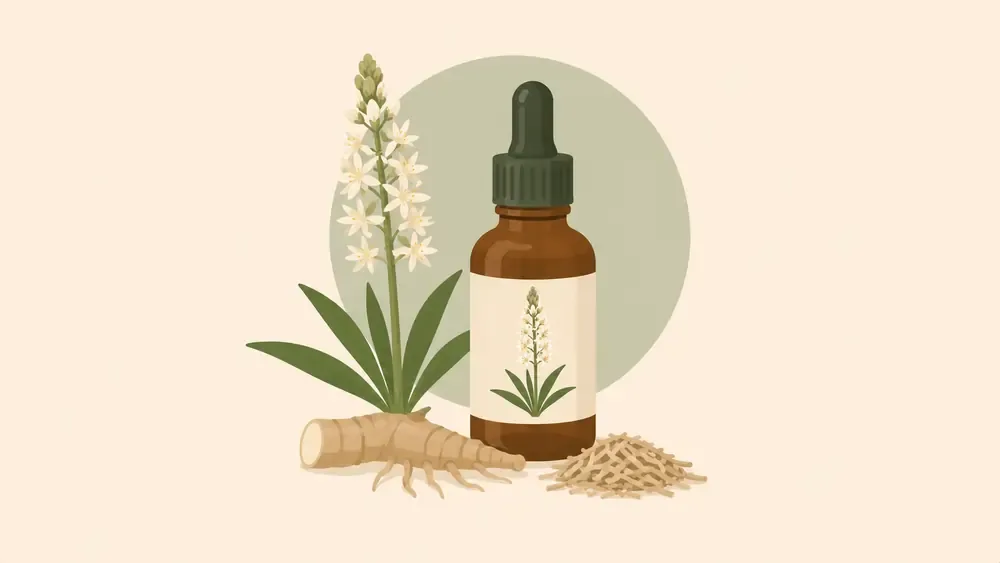
A clear False Unicorn Root label should show the botanical name Chamaelirium luteum, the plant part, the product format, the serving size, and the base or extract type. If it is a tincture, the label should tell you whether the base is alcohol, water, glycerin, vinegar, or a blend.
The label should also make sourcing easier to understand. False Unicorn Root is often discussed in conservation and wild-harvest contexts, so terms like wildcrafted, cultivated, responsibly farmed, or responsibly harvested deserve attention.
A weak label relies only on dramatic common names or vague wellness language. A stronger label makes the product identity clear before asking you to trust it.
Quick Label Decoder: False Unicorn Root Terms
| Label Term | What It Usually Means | Buyer Note |
|---|---|---|
| Chamaelirium luteum | Botanical name for False Unicorn Root | Best identity anchor on the label |
| False Unicorn Root | Common name for the root product | Useful, but not enough without botanical name |
| Dried root | Root material dried before processing | Common in capsules, powders, and some extracts |
| Root extract | Processed preparation made from root material | Check solvent, base, and serving directions |
| Liquid extract | Liquid herbal preparation | May be alcohol-based or alcohol-free |
| Alcohol-free tincture | Liquid extract without alcohol as the main base | Often glycerin-based, but check ingredients |
| Glycerite | Liquid extract using glycerin as a base | Usually sweeter and alcohol-free |
| Wildcrafted | Collected from wild populations | Ask about sustainability and harvest responsibility |
| Responsibly farmed | Cultivated rather than wild-harvested | Often a stronger sourcing signal for at-risk plants |
Why Chamaelirium luteum Matters
Chamaelirium luteum is the botanical name that helps confirm the plant identity. False Unicorn Root has several common names, including Fairy Wand, Devil’s Bit, Blazing Star, Helonias, Starwort, and Star Grub Root. Common names can vary, overlap, or confuse buyers.
For supplement shopping, the botanical name matters more than the common name. A product that says False Unicorn Root and Chamaelirium luteum gives you clearer information than a product that says only Unicorn Root or Blazing Star.
This is especially important because True Unicorn Root usually refers to a different plant, Aletris farinosa. A buyer should not rely on “Unicorn Root” wording alone.
What Plant Part Should the Label List?
The label should clearly state the plant part. For this product category, root is usually the key plant part. You may see root, dried root, root extract, root and rhizome, or dried root extract.
Plant part matters because botanical name alone is not the full label story. Leaf, aerial parts, seed, flower, root, and rhizome are different materials.
If a label says only Chamaelirium luteum but does not list the plant part, it is less complete. A careful buyer should prefer labels that clearly show both plant identity and plant part.
Dried Root vs Root Extract: What Is the Difference?
Dried root means the root material was dried before being used in a product. It may be powdered, cut, encapsulated, or extracted. Root extract means the plant material has gone through an extraction process.
A capsule may contain dried root powder. A tincture may contain a liquid extract made from root material. A glycerite may contain root extracted into glycerin and water. These are different product styles.
Do not compare dried root and extract by one number alone. A 500 mg dried root capsule and a liquid extract serving are not automatically comparable.
What Is a False Unicorn Root Tincture?
A False Unicorn Root tincture is a liquid herbal extract made from plant material, often root, in a liquid base. The base may include alcohol and water. The label should show serving directions, botanical name, plant part, and ingredient base.
Alcohol-based tinctures are common in herbal products. They may have a sharper taste and may not fit people who avoid alcohol for personal, religious, medical, age-related, or medication-related reasons.
If alcohol avoidance matters to you, check the ingredient list before buying. Do not assume every liquid extract is alcohol-free.
What Is an Alcohol-Free Tincture or Glycerite?
An alcohol-free tincture is a liquid extract that does not use alcohol as the main base. A glycerite usually uses vegetable glycerin and water. It may taste sweeter and softer than an alcohol-based tincture.
Alcohol-free does not automatically mean better. It simply means the base may fit different preferences. You still need to review botanical name, plant part, serving directions, sourcing, quality testing, and safety cautions.
For sensitive supplement categories like False Unicorn Root, the absence of alcohol does not remove the need for professional guidance in pregnancy, breastfeeding, medication use, or reproductive-health contexts.
Alcohol-Based vs Alcohol-Free False Unicorn Root Extract
| Label Detail | Alcohol-Based Tincture | Alcohol-Free Glycerite |
|---|---|---|
| Base | Usually alcohol and water | Usually glycerin and water |
| Taste | Sharper, warming, more herbal | Sweeter, softer, sometimes syrup-like |
| Best for | People comfortable with alcohol-based extracts | People avoiding alcohol-based formulas |
| Still needs safety review? | Yes | Yes |
| What to check | Alcohol percentage, serving size, root source | Glycerin source, serving size, root source |
What Does Extract Ratio Mean?
An extract ratio describes the relationship between the starting plant material and the final extract. For example, a liquid extract might list a ratio such as 1:2, 1:5, or another format.
Extract ratio is not a simple quality score. It does not automatically mean stronger, better, or more appropriate. It must be read with serving size, plant part, fresh or dried material, extraction base, and directions.
If a label lists a ratio but does not clearly show serving directions or plant identity, the ratio is not enough to make the label strong.
Serving Directions: What to Check First
Serving directions tell you how the product is meant to be used according to the label. For tinctures, the serving may be listed in drops, droppers, or milliliters. For capsules, it may be capsules per serving. For powders, it may be grams or teaspoons.
Read serving size before comparing product amounts. A front label may show a number, but the Supplement Facts panel tells you how that number fits into one serving.
Do not invent your own serving pattern based on another brand, a forum comment, or an old herbal reference. Use the label as the starting point and ask a qualified professional when safety factors apply.
Why Sourcing Matters for False Unicorn Root
Sourcing matters because False Unicorn Root is often discussed in relation to wild harvest pressure and plant conservation. This is not a casual sourcing detail.
Look for terms such as responsibly farmed, cultivated, organically grown, sustainably harvested, nursery-grown, or verified source. Wildcrafted is not automatically bad, but it needs more scrutiny. A wildcrafted product should explain harvest responsibility.
For at-risk or slow-growing botanicals, buyer pressure can affect wild populations. A label with transparent sourcing is stronger than one that uses rare-plant language without proof.
Wildcrafted vs Responsibly Farmed
| Sourcing Term | What It Suggests | Buyer Question |
|---|---|---|
| Wildcrafted | Collected from wild populations | Was it harvested responsibly and legally? |
| Responsibly harvested | Claims careful harvest practices | Does the brand explain what that means? |
| Responsibly farmed | Cultivated under managed conditions | Is the source clearly described? |
| Cultivated | Grown rather than gathered wild | Often preferable for conservation-sensitive herbs |
| No sourcing detail | Unclear origin | Ask before buying or choose a clearer label |
Testing and Quality Notes to Look For
Quality testing can help support label trust. Useful terms may include identity testing, third-party testing, microbial testing, heavy metal testing, pesticide testing, and batch testing.
Identity testing is especially important for botanicals with confusing common names. It helps confirm that the product matches the plant name on the label.
A product does not need to put every testing detail on the front label, but the brand should make quality information accessible. Secrets Of The Tribe takes a conservative editorial stance here: rare or confusing botanicals deserve more sourcing and identity transparency, not less.
Safety Notes Before Buying False Unicorn Root
False Unicorn Root should be approached carefully because online discussions often connect it with sensitive reproductive-health topics. That does not mean buyers should self-direct use based on traditional reputation.
Avoid use during pregnancy and breastfeeding unless a qualified healthcare professional gives personalized guidance. If you are trying to conceive, managing cycle concerns, using hormone-related medication, or managing hormone-sensitive conditions, ask a qualified professional before considering this herb.
People with gastrointestinal sensitivity, liver or kidney concerns, chronic health conditions, medication use, or allergy concerns should also be cautious. Children and teens should not use False Unicorn Root supplements without qualified professional guidance.
What False Unicorn Root Products Should Not Be Used For
False Unicorn Root tinctures, glycerites, capsules, powders, and dried root products should not be used to self-manage fertility concerns, pregnancy concerns, miscarriage risk, menstrual symptoms, hormone conditions, pelvic pain, infections, or any diagnosed condition.
If symptoms are severe, unusual, persistent, worsening, or related to pregnancy or reproductive health, seek appropriate medical care. A label guide cannot answer medical questions.
Be skeptical of aggressive claims. A good product-adjacent article can explain botanical identity, plant part, extract type, sourcing, and quality without making medical promises.
False Unicorn Root Label Checklist
Use this checklist before buying False Unicorn Root tincture, glycerite, alcohol-free extract, capsule, powder, or dried root. The goal is to confirm identity, format, sourcing, and serving details before considering whether the product is appropriate.
Confirm the Botanical Name
Look for Chamaelirium luteum. Do not rely only on common names such as False Unicorn, Fairy Wand, Devil’s Bit, or Blazing Star.
Check the Plant Part
Look for root, dried root, root extract, root and rhizome, or another clearly stated plant part. Plant part should not be left vague.
Identify the Extract Type
Check whether the product is a tincture, glycerite, liquid extract, capsule, powder, or dried root. Each format uses different label details.
Review the Tincture Base
If choosing a liquid extract, check whether it uses alcohol, glycerin, water, vinegar, or a blend. Alcohol-free products should say what base they use.
Read Serving Directions
Look for drops, droppers, milliliters, capsules, grams, or teaspoons. Do not guess based on another product.
Check Extract Ratio
If the label gives a ratio, read it with plant part, fresh or dried status, serving size, and extraction base. Ratio alone is not a quality guarantee.
Look for Responsible Sourcing
Prefer labels that explain cultivated, responsibly farmed, responsibly harvested, or verified sourcing. Be cautious with vague wildcrafted claims.
Look for Testing Information
Useful signals include identity testing, microbial testing, heavy metal testing, pesticide testing, third-party testing, or batch documentation.
Review Safety Factors
Ask a qualified professional if you are pregnant, breastfeeding, trying to conceive, taking medication, managing hormone-sensitive conditions, or buying for a child or teen.
Common Label Mistakes to Avoid
Trusting the Common Name Alone
False Unicorn Root has many common names. Chamaelirium luteum is the clearer identity anchor.
Ignoring the Plant Part
Root, dried root, root extract, and root and rhizome are label details that matter. Do not skip them.
Assuming Alcohol-Free Means Risk-Free
Alcohol-free glycerites still contain botanical extract. The base changes preference, not the need for safety review.
Taking Wildcrafted at Face Value
Wildcrafted should come with sourcing responsibility. Ask how the brand protects plant populations.
Buying Based on Fertility or Hormone Claims
Do not choose False Unicorn Root based on reproductive-health promises. Use professional guidance for health questions.
False Unicorn Root Label Guide | FAQ
What should a False Unicorn Root label say?
A clear label should show Chamaelirium luteum, plant part, product format, serving size, extract type, base, sourcing, and warnings.
What is Chamaelirium luteum?
Chamaelirium luteum is the botanical name commonly used for False Unicorn Root.
Is False Unicorn Root the same as True Unicorn Root?
No. False Unicorn Root usually refers to Chamaelirium luteum, while True Unicorn Root usually refers to Aletris farinosa.
What plant part is used in False Unicorn Root products?
Labels commonly refer to root, dried root, root extract, or root and rhizome. The plant part should be clearly stated.
What is an alcohol-free False Unicorn tincture?
It is a liquid extract that does not use alcohol as the main base. It may use glycerin, water, or another base.
Is a glycerite the same as a tincture?
A glycerite is a type of liquid extract using glycerin as a base. It is often alcohol-free, but you should still check the label.
What does wildcrafted mean?
Wildcrafted means gathered from wild plant populations. For conservation-sensitive herbs, ask about harvest responsibility.
Is responsibly farmed better than wildcrafted?
Often it is a stronger conservation signal, but the label should explain the source clearly.
Can False Unicorn Root be used during pregnancy?
Do not use it during pregnancy unless a qualified healthcare professional gives personalized guidance.
Glossary
False Unicorn Root
A common name usually referring to Chamaelirium luteum root material.
Chamaelirium luteum
The botanical name commonly used for False Unicorn Root.
Root
The underground plant part commonly referenced on False Unicorn Root labels.
Dried Root
Root material that has been dried before use in capsules, powders, teas, or extracts.
Root Extract
A processed preparation made from root material.
Tincture
A liquid herbal extract, often made with alcohol and water unless the label says otherwise.
Glycerite
A liquid extract made with glycerin, often used as an alcohol-free format.
Extract Ratio
A ratio that describes the relationship between starting plant material and final extract.
Wildcrafted
Collected from wild plant populations rather than cultivated fields.
Responsibly Farmed
Grown under managed conditions with attention to sourcing and plant supply.
Conclusion
A strong False Unicorn Root label should clearly show Chamaelirium luteum, root or dried root, extract type, serving directions, tincture base, sourcing, and testing details. Avoid vague common-name labels and products that lean on reproductive-health claims instead of clear identity and quality information.
Sources
False Unicorn Root botanical identity, common names, conservation context, and sourcing concern, United Plant Savers — unitedplantsavers.org/false-unicorn-root-chamaelirium-luteum
False Unicorn cultivation and wild-harvest economic context, United Plant Savers — unitedplantsavers.org/184-false-unicorn-cultivation
Chamaelirium luteum plant profile, common names, and botanical description, Missouri Botanical Garden — missouribotanicalgarden.org/PlantFinder/PlantFinderDetails.aspx
False Unicorn Root common names, range, rarity, and non-timber forest product profile, Lincoln University Cooperative Extension — lincolnu.edu/cooperative-extension-and-research/non-timber-forest-product-ntfp-highlight-false-unicorn-root.pdf
False Unicorn safety cautions, lack of standardized dosing, and pregnancy/lactation warning, Drugs.com — drugs.com/npp/false-unicorn.html
Dietary supplement label serving size and Supplement Facts guidance, U.S. Food and Drug Administration — fda.gov/food/dietary-supplements-guidance-documents-regulatory-information/dietary-supplement-labeling-guide-chapter-iv-nutrition-labeling