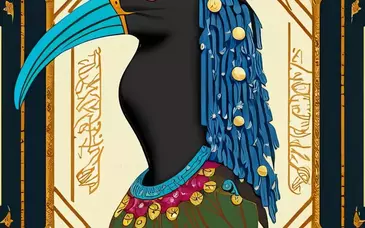
Splendors of Antiquity: Exploring the Timeless Beauty of Ancient Egyptian Art

In the cradle of civilization, ancient Egypt stands as a testament to the enduring legacy of human creativity. The art of ancient Egypt, spanning over three millennia, encapsulates the essence of a society deeply rooted in spirituality, mythology, and the pursuit of immortality. Join us as we journey through the sands of time to explore the captivating world of ancient Egyptian art.

1. Hieroglyphs and Pictorial Narratives: The Language of the Gods: Ancient Egyptian art is a visual language that speaks through hieroglyphs and pictorial narratives. Explore the intricate world of hieroglyphics, where symbols and images conveyed not only linguistic messages but also stories of the divine, rituals, and daily life.

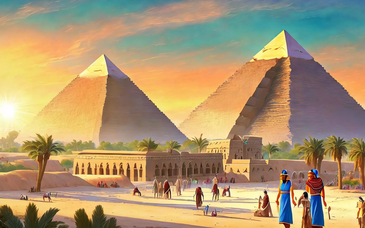
2. Monumental Architecture: Pyramids, Temples, and Sphinx: The grandeur of ancient Egyptian art is etched in colossal monuments like the Great Pyramid of Giza, the Sphinx, and majestic temples along the Nile. Marvel at the precision of architectural design, intricate carvings, and colossal statues that paid homage to gods, pharaohs, and the afterlife.

3. Statuary and Portraiture: Immortalizing Pharaohs and Nobility: The art of ancient Egypt immortalized its rulers through statuary and portraiture. Delve into the regal sculptures of pharaohs, queens, and nobility, each carved with meticulous detail to capture not only physical likeness but also the divine essence of the subjects.

4. Funerary Art: The Quest for Immortality: The art of death in ancient Egypt was a profound exploration of the afterlife. Examine the exquisite funerary art found in tombs and burial chambers, including intricate coffins, burial masks, and wall paintings, all crafted to guide the deceased on their journey to eternity.

5. Symbolism and Mythology: Gods, Goddesses, and Cosmic Harmony: Ancient Egyptian art is rich in symbolism, intertwining with the mythology of gods and goddesses. Uncover the symbolic representations of Anubis, Ra, Isis, and other deities, and witness how cosmic harmony was visually expressed through religious iconography.

6. Decorative Arts: Luxurious Treasures and Everyday Elegance: Explore the opulence of ancient Egyptian decorative arts, from luxurious jewelry to everyday items adorned with intricate designs. Witness the fusion of functionality and artistic expression in pottery, textiles, and personal adornments that reflected the sophistication of Egyptian society.

7. Temporal Evolution: Art Across Dynasties and Kingdoms: Trace the evolution of ancient Egyptian art across different dynasties and kingdoms. Witness the stylistic shifts, innovations, and cultural influences that shaped the artistry of each era, creating a dynamic visual narrative of the civilization's rise and fall.

The art of ancient Egypt is a timeless legacy that transcends millennia, offering a glimpse into the spiritual, social, and artistic dimensions of a civilization that flourished along the Nile. As we unravel the masterpieces left by skilled artisans and craftsmen, we discover a world where art served not only as an aesthetic expression but as a conduit to the divine, leaving an indelible mark on the canvas of human history.
You Might Also Like:

World History related image
Read More

World History

Welcome to our World History section, a vast treasure trove of historical knowledge that takes you on a captivating journey through the annals of human civilization. Our collection spans a wide spectrum of topics, providing an exhaustive resource for history enthusiasts, students, and curious minds ...
Read More

Ahmose

Ancient Egypt: Ahmose By Robert Guisepi, 1984 Egypt’s History The Valley of the Nile Ahmose (reigned c. 1539–14 BC) was the founder of Egypt’s 18th dynasty. He completed his brother’s mission to expel the Hyksos—Asiatic rulers who had dominated Egypt—and expanded Egypt’s influence by invading Palest...
Read More

Amenhotep II

Ancient Egypt: Amenhotep IIEGYPT'S HISTORYBy Robert Guisepi, 1984 The Valley of the Nile Amenhotep II (reigned c. 1426–1400 BC) was a 15th-century BC king of Egypt and the son of Thutmose III. He ruled during the height of Egypt's imperial era and worked to maintain his father's conquests through mi...
Read More

Amenhotep III

Ancient Egypt: Amenhotep III EGYPT'S HISTORYRobert Guisepi, 1984The Valley of the Nile Amenhotep III (ruled 1390-1353 BC), the son of Thutmose IV, ascended to the throne at approximately 12 years of age. Early in his reign, he married Tiy, who became his queen. Unlike earlier royal tutors, Tiy's fat...
Read More

Ancient Egypt

Ancient Egypt (epigraphy) Egypt attracted the special curiosity of the Greeks, and Herodotus (5th century BC) devoted an entire book to on-the-spot observations and fanciful tales about the land of the Nile. The lost Aigyptiaka (or Aegyptiaca) of Manetho (3rd century BC) contained the roster of 30 d...
Read More

Apopis

Ancient Egypt: Apopis Egypt's HistoryRobert Guisepi, 1984 The Valley of the Nile Apopis was the last great Hyksos king of Egypt (reigned c. 1585-1542 BC). Initially, he controlled most of Egypt but was gradually driven back northward to the vicinity of his capital in the Nile River delta due to succ...
Read More

Religions Of Egypt

Ancient Egypt, Religions Of Egypt Author: Foot Moore, GeorgeChapter II The Middle Kingdom And The Empire The Rise of Thebes - The Sun as Supreme God - Local Gods - Identifications - Enneads and Triads - The Dead - Judgment before Osiris - Moral Ideas - The Empire - Amon-Re the National God - Power o ...
Read More

Egyptian and Hittite Empires, 1279 BCE

Conquest by Hyksos and Egyptian Expansion to Ramses II Eventually, like previous dynasties, the Twelfth Dynasty fell. And the Thirteenth Dynasty, at Memphis, waned across its 150 years of rule and fell with what by now was an old phenomenon: invasion by a foreign army, around the year 1650 BCE. The ...
Read More

Ancient Egypt related image
Read More

Ancient Egypt

Welcome to the ideal place to start exploring the wonders of the Ancient Egypt. Find out all about this amazing culture, and learn about the gods they worshiped, the Pharaohs that ruled and the tombs and statues they left behind. find out about Tutankhamun, Akhenaten and the other celebrities of t...
Read More

Maps of Ancient Egypt

Ancient Egypt had its origin in the course of the Nile River. It reached three periods of great pharaonic splendor: the Ancient Kingdom, the Middle Kingdom and the New Kingdom. Ancient Egypt map domain stretched from the delta of the Nile in the north, to Elephantine Island, where is the first catar...
Read More

Burial Customs

Mummy and Coffin of Meresamun Cartonnage, pigment, human remainsThird Intermediate Period, Dynasty 22, ca. 946-712 B.C.Purchased in Luxor, 1920OIM 10797 This colorful cartonnage mummy case, which still contains the mummy of an ancient Egyptian woman, is inscribed with the name Meresamun ("She lives ...
Read More

King List

The Early Dynastic Period -0 : 1 : 2 : The Old Kingdom -3 : 4 : 5 : 6 : The First Intermediate Period -7+8 : 9+10 : The Middle Kingdom -11 : 12 : The Second Intermediate Period -13 : 14 : 15 : 16 : 17 : The New Kingdom -18 : 19 : 20 : The Third Intermediate Period -High Priests (Thebes) : 21 : 22 : ...
Read More

Mummy

Interesting facts and information about the mummification process. The mummy shown here dates from the Roman Period. It has a distinctive painting inlaid into the head part, and is intricately bandaged and studded. The feet are molded in gold painted plaster, which is typical of the period. ...
Read More

Thoth, the Egyptian God of Wisdom and Writing related image
Read More

Thoth, the Egyptian God of Wisdom and Writing

The god Thoth was worshiped in the form of an Ibis, and is often shown in human form with the unusual head of that bird. Thoth was primarily thought to be the god of wisdom. He was patron of arts and science and also the patron god of scribes. He was the inventor of the words of god, or Hieroglyphs...
Read More

Osiris And Isis

Osiris is perhaps the most famous of the gods of Ancient Egypt. Here he is shown in his typical guise as a mummified pharaoh holding the hook and flail, the traditional symbols of royal authority. Osiris is usually depicted wearing the feathered Atef crown. Osiris is a common feature in Egyptian fu...
Read More